
Small State, Giant Impact
With just 0.22% of India’s landmass and 0.25% of its population, Manipur’s contribution to Indian football is nothing short of extraordinary. Its dominance isn’t accidental — it’s built on deep-rooted cultural affinity, community-led training, and fierce resilience, especially in the face of conflict and poverty.
Manipur’s Unmatched Output
- In the last 12 months, 9 Manipuri players were called up to the Indian men’s national team.
- Over 50 Manipuri players currently feature in the ISL and I-League.
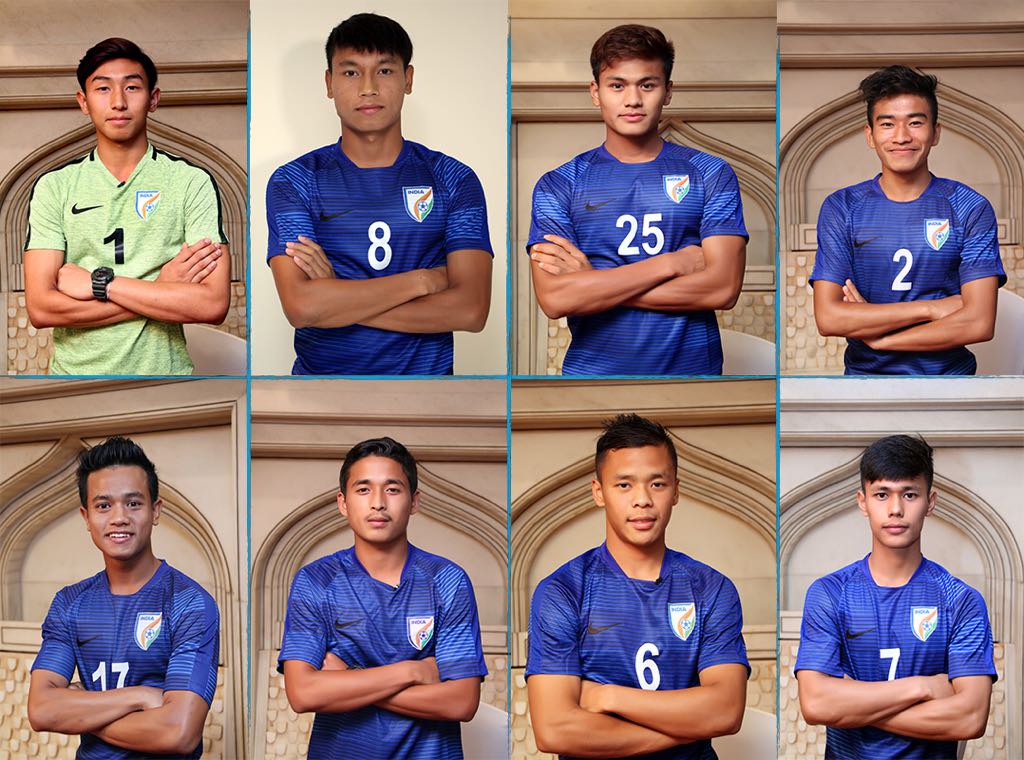
- 8 out of India’s U-17 World Cup 2017 squad were from Manipur.
- 25% of India’s elite footballers from the Northeast are from Manipur — highest among any state.
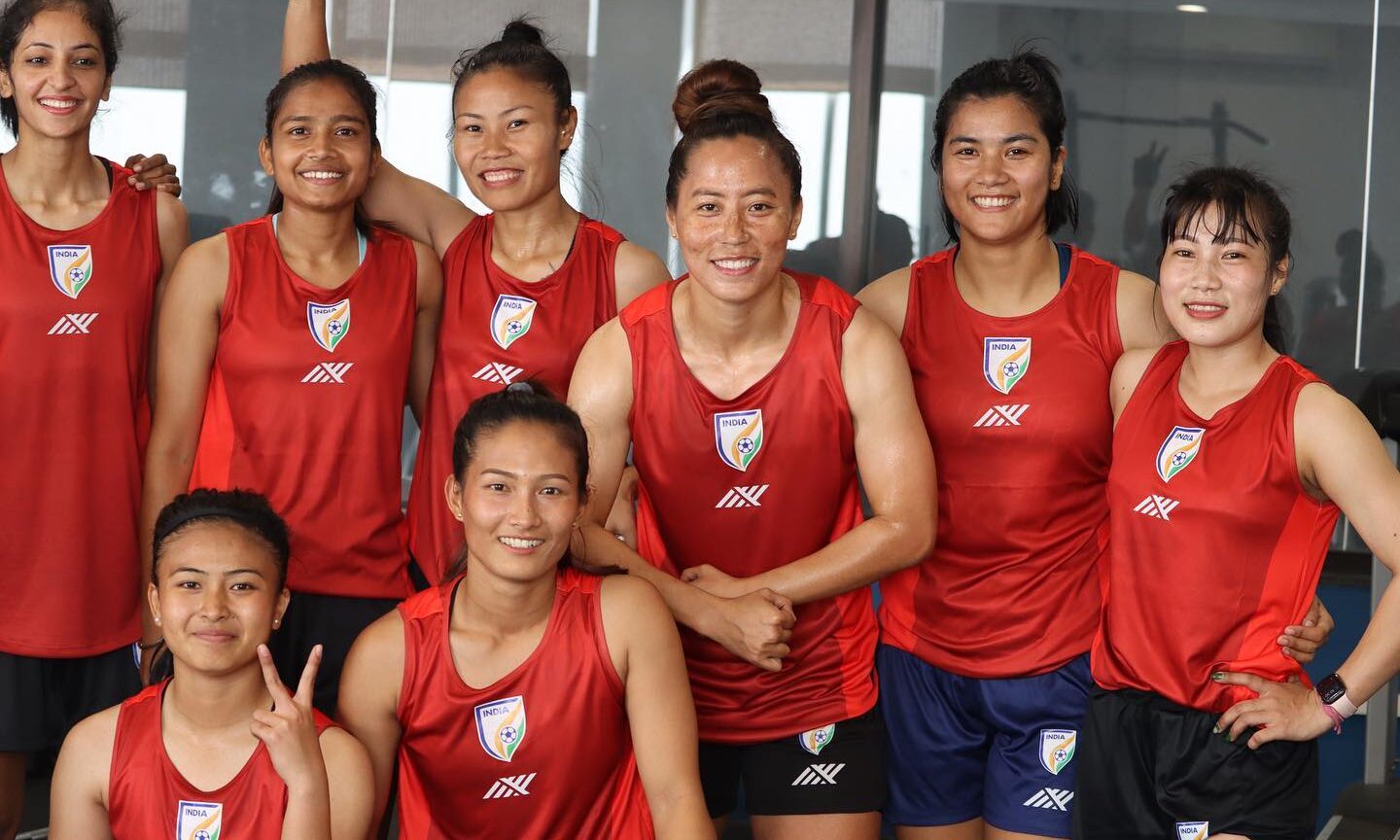
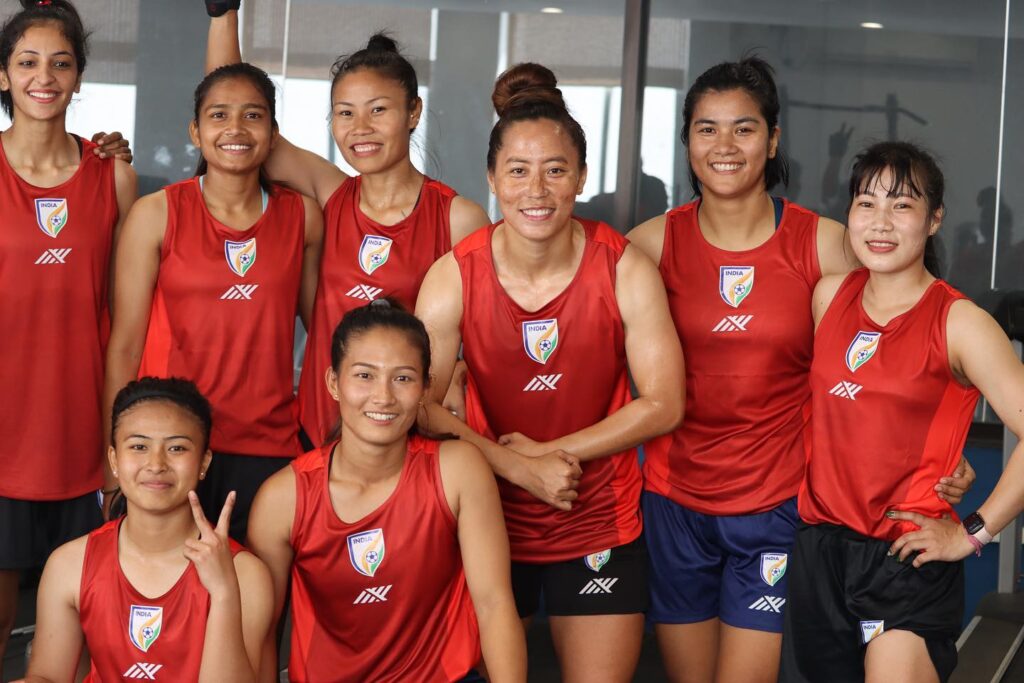
- In women’s football, 8 of the 23 national team members are Manipuri.
Despite lack of early infrastructure, most start in community fields under local mentors before rising to elite platforms like TRAU FC or NEROCA FC.
Club Culture, Academies & Local Leagues
The Manipur State League (since 2006) boasts 17 competitive teams, fostering youth transitions into professional circuits.
Flagship Clubs:
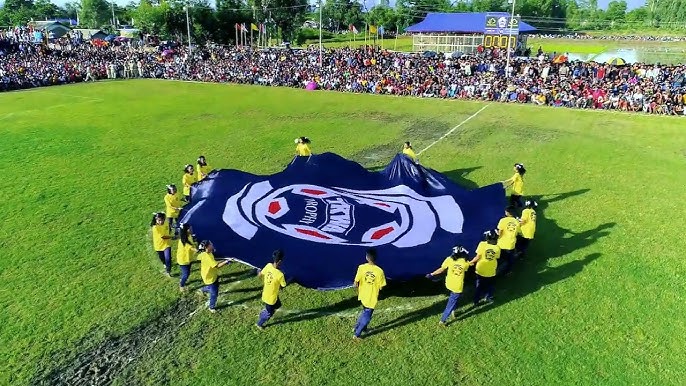
- NEROCA FC – First Northeast club in Durand Cup final. Home games attract over 30,000 fans.
- TRAU FC – Focused on homegrown development.
Other tournaments like the TAKWA Trophy and A-division leagues provide invaluable competition exposure.
Football Nurseries: Classic & Grassroots
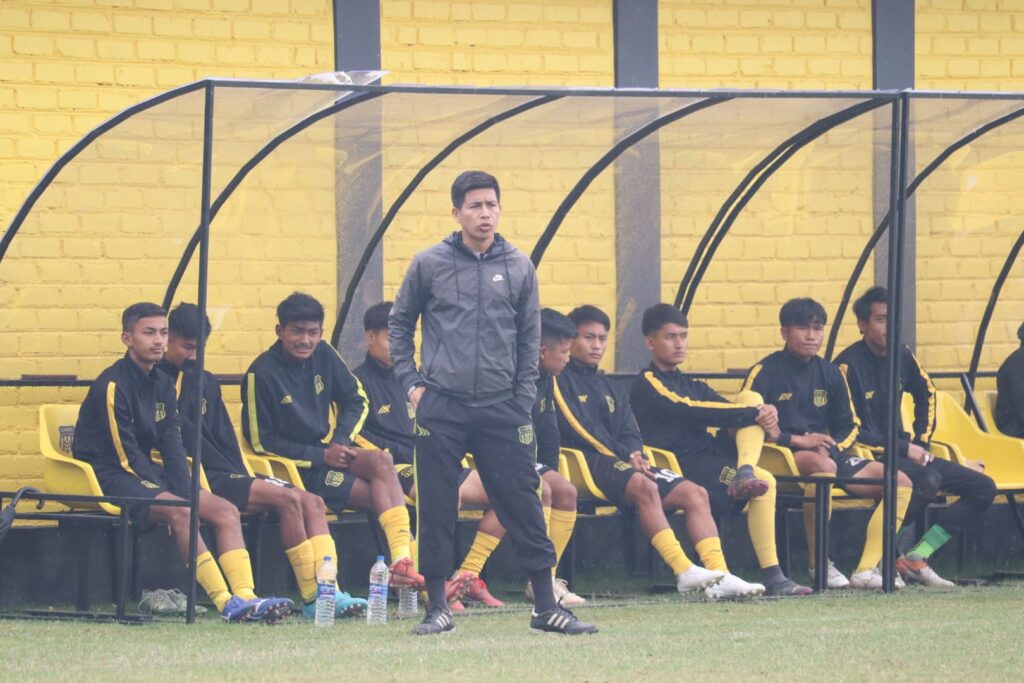
Classic Football Academy (CFA) – Currently India’s leading youth talent hub; players now feature in U-17, U-20, and ISL.
- PYA (Posterior Yaiskul Athletic Club) – A pioneer in state-level talent.
- KRYPSA FC – Backbone of women’s football.
- Turf culture: Hundreds of mini-pitches and 5-a-side turfs now exist across the valley, maintaining year-round training.
In Manipur, football is a lifestyle, not a weekend hobby.
Player Profiles: The Faces Behind the Stats
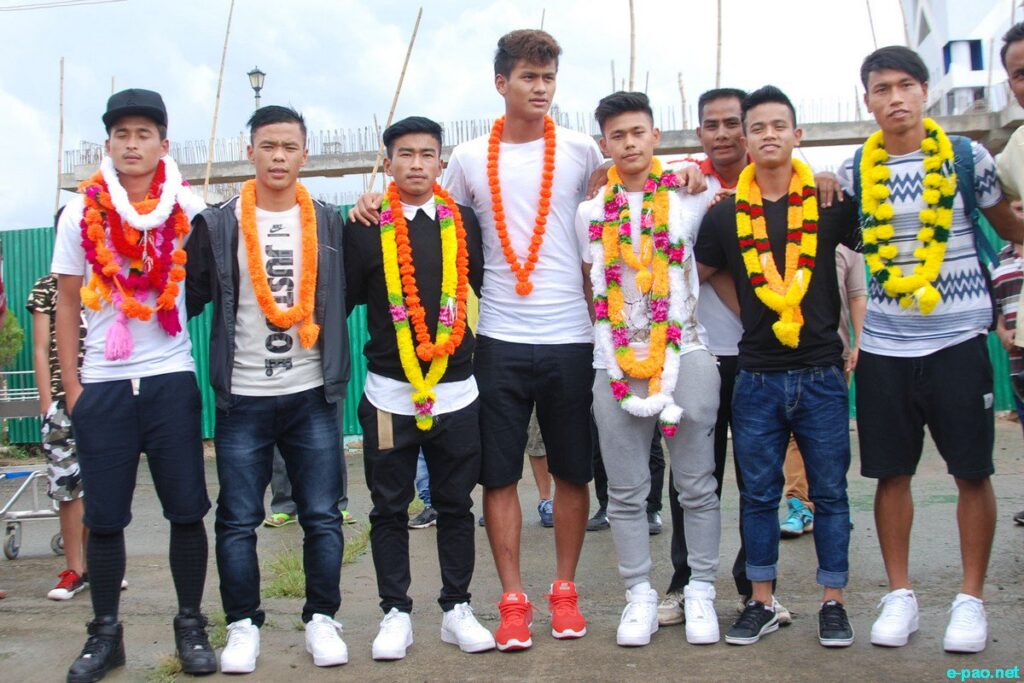
1. Dheeraj Singh (Goalkeeper) From Moirang to the U-17 World Cup, Dheeraj’s rise defied odds. Training on bare concrete, he became the country’s finest youth goalkeeper, even attracting European scouts.
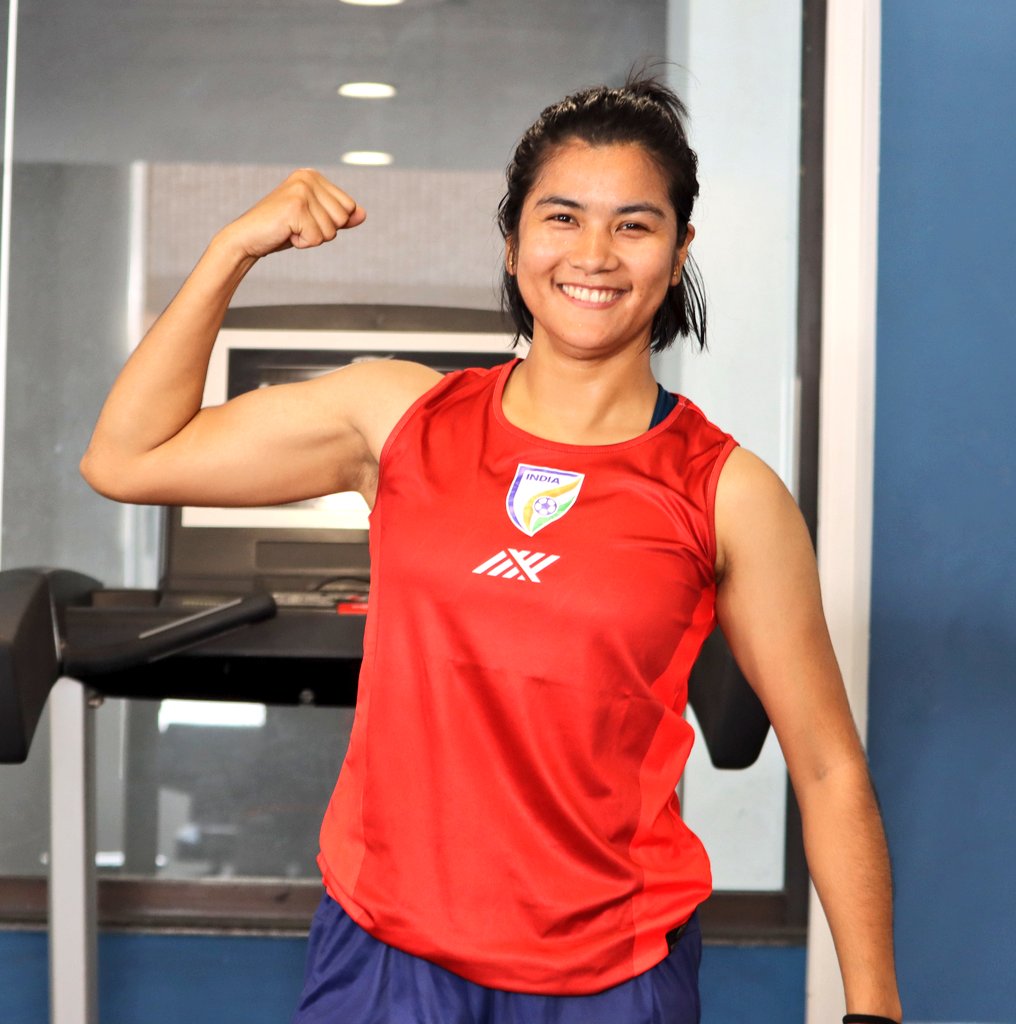
2. Bala Devi India’s highest female scorer. She fought taboos, trained alone in Bangalore at a stage, and became the first Indian woman to sign for a European club (Rangers FC, Scotland).
3. Jeakson Singh His header against Colombia in the U-17 World Cup remains iconic — India’s first-ever goal at a FIFA tournament.
4. Boris Thangjam A product of CFA, Boris now plays wingback for Goa and was among India’s top U-17 performers.
5. Panthoi Chanu The first Indian woman to play professionally in Australia — a beacon for rural girls in Imphal.
And many more…..
From Legends to New Blood
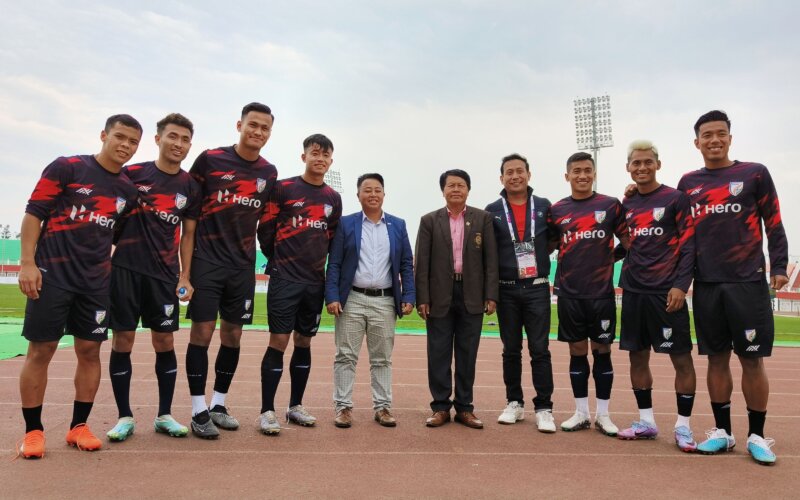
Former Icons:
- Renedy Singh, Tomba Singh, Bijen Singh, Gouramangi, Dharamjit, Shomota Shaiza, Naoba Singh
- James Singh, Ratan Singh, Sanaton Singh, etc. — early 2000s stalwarts
U-17 Generation:
- Dheeraj, Jeakson, Boris, Suresh Wangjam, Amarjit Singh, Ningthoinganba Meitei, etc.
Women’s Trailblazers:
- Oinam Bembem Devi – “Durga of Indian Football”
- Ashalata Devi – First Indian woman with 100 caps
- Bombayla Devi, Panthoi Chanu, Bala Devi – global trail-setters
Football Amid Conflict
The Kuki–Meitei ethnic violence (2023) tore through Manipuri society.
- Dozens of players, especially Families of Meitei players, were displaced or lost training facilities.
- Chinglensana’s turf — built with his entire savings — was burnt.
- Despite fear and trauma, players refused to stop training.
Football became an act of resistance and healing.
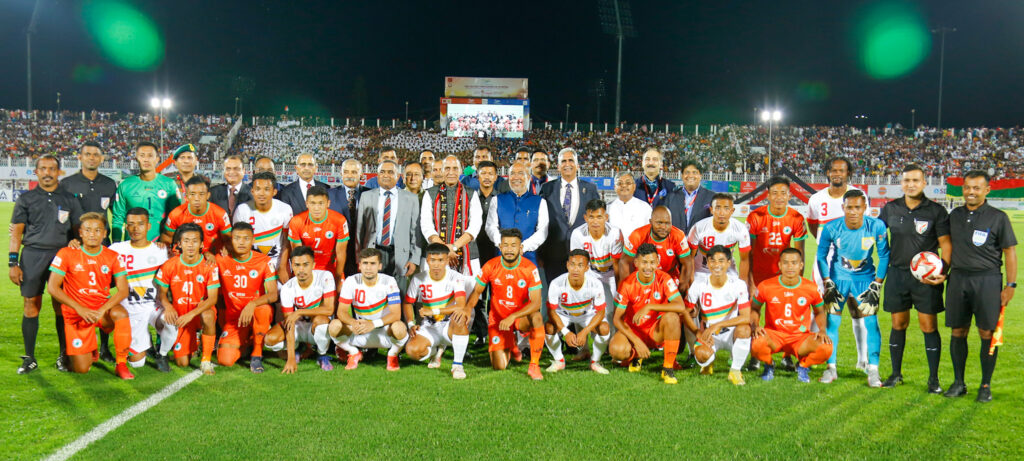
Beyond Football: Manipur’s Sporting Dominance
Boxing:
- Mary Kom, Sarita Devi, Dingko Singh, Devendro Singh
Weightlifting:
- Mirabai Chanu, Kunjarani Devi, Y. Renu Bala Chanu
Hockey:
- Sushila Chanu, Nilakanta Sharma, Waikhom Surjalata, Thoiba Singh
Judo/Archery:
- Bombayla Devi, Lourembam Brojeshori, Khumujam Tombi Devi
Olympics Footnote:
- Over 15 Manipuri Olympians, India’s highest per capita.
Challenges & Resilience
- Lack of infrastructure and limited government funding.
- Ethnic tensions stall sports events.
- Players often lack post-retirement support.
- Community-run setups struggle for consistency.
| Pillar | Manipuri Model |
|---|---|
| Cultural Immersion | Children play daily — in paddy fields, temple grounds, streets |
| Local Coaching | Former players, parents, even priests become coaches |
| Gender Equity | Girls’ leagues run parallel from grassroots to pro |
| Year-Round Games | Mini-turfs and floodlit fields keep the ball rolling |
Institutional Backbone
- AMFA (All Manipur Football Association):
- 14,800+ registered players
- 835+ certified coaches
- 795+ referees
- 535 clubs
- National Sports University (NSU) in Imphal — first of its kind in India.
- Khelo India, Fit India, and CM’s Indigenous Sports Scheme targeting rural talent.
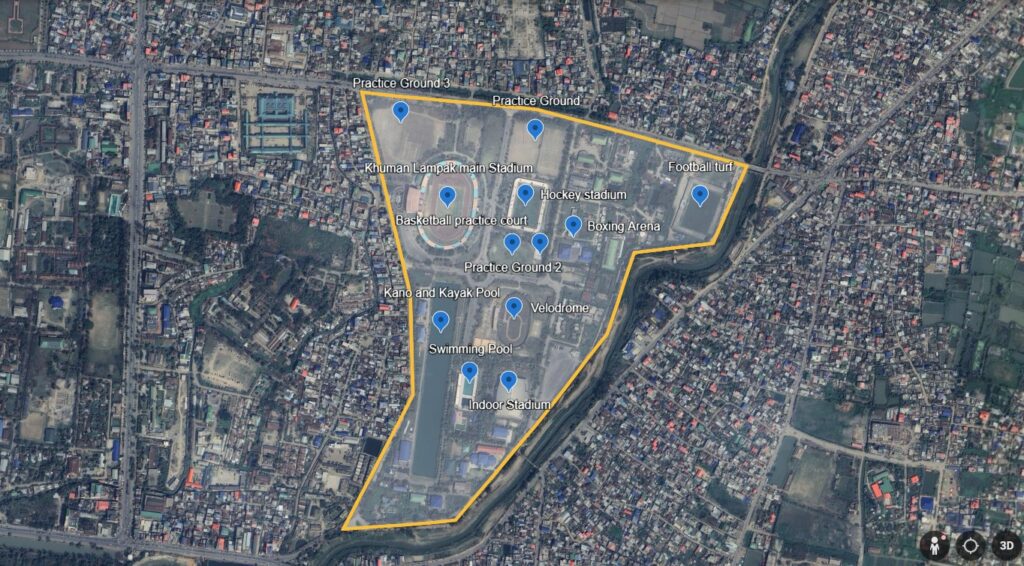
Manipur was the first state to declare a Sports Person’s Day (Sept 25), led by Chief Minister W. Nipamacha Singh — commemorating National Games victory.
Lessons for India
| Area | Manipur’s Model | National Gaps |
| Youth Scouting | Local leagues, school games | Urban-centric academies |
| Gender Focus | Equal training & platforms | Mostly male focus |
| Tactical Training | Intuitive + experiential | Bookish coaching |
| Community Ownership | Parental & ex-player mentors | Reliance on private academies |
| Career Pathways | Pro clubs + govt jobs | Limited exits post-retirement |
Future Outlook
- CFA and AMFA’s pipeline of 200+ youth under elite training
- NSU collaborations with international coaches in progress
- Push for dedicated sports policy post-2023 ethnic strife
- Proposal for Manipur Super League to match ISL-I-League format
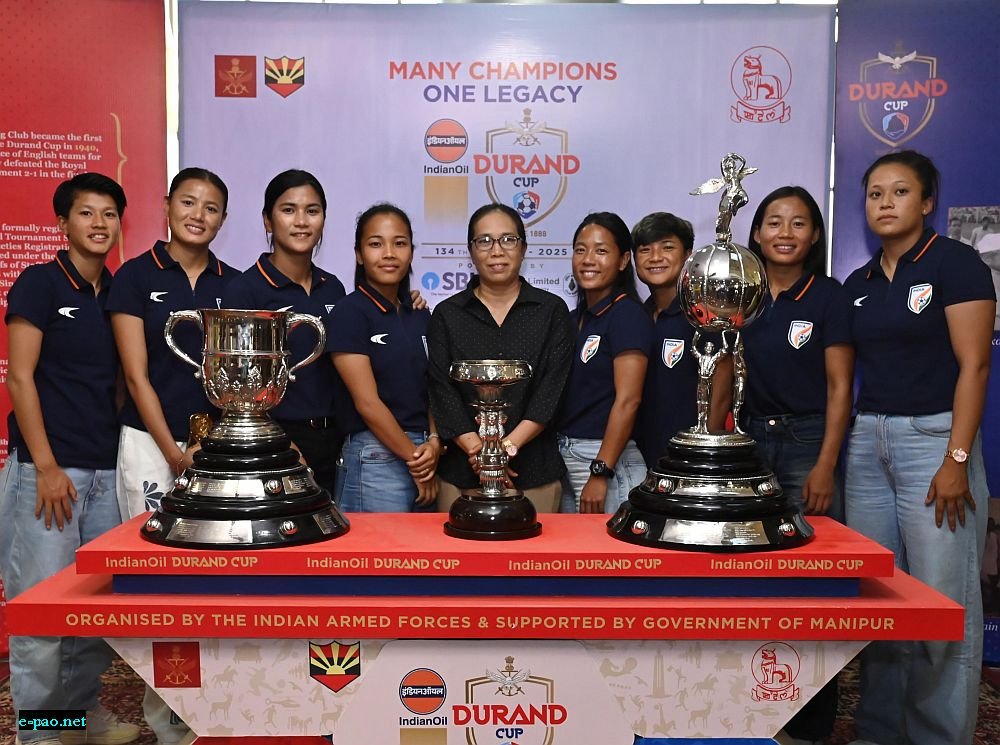
Manipur didn’t wait for the All India Football Federation, corporate sponsors, or shiny infrastructure. It built its football revolution one muddy paddy field at a time. One barefoot kick, one borrowed ball, one community cheer — that’s how the story began.
In this small state tucked into India’s far east, football isn’t played for fame. It’s played because it’s woven into identity — a survival instinct, a cultural rite, and a daily ritual. When the rest of the country sleeps, you’ll still find children training under streetlights, fathers-turned-coaches shouting advice from the sidelines, and mothers selling vegetables by day to buy boots for their sons and daughters.
Even after ethnic strife ravaged the land in 2023, leaving players homeless and traumatized, they laced up their boots and stepped onto the pitch — because for them, football is more than a game. It is defiance. It is dignity. It is home.
While big cities debate formats and franchises, Manipur produces footballers who bleed for the jersey. And until every policymaker in Indian football listens to the lessons this little state has to offer, we’ll continue falling short on the global stage.
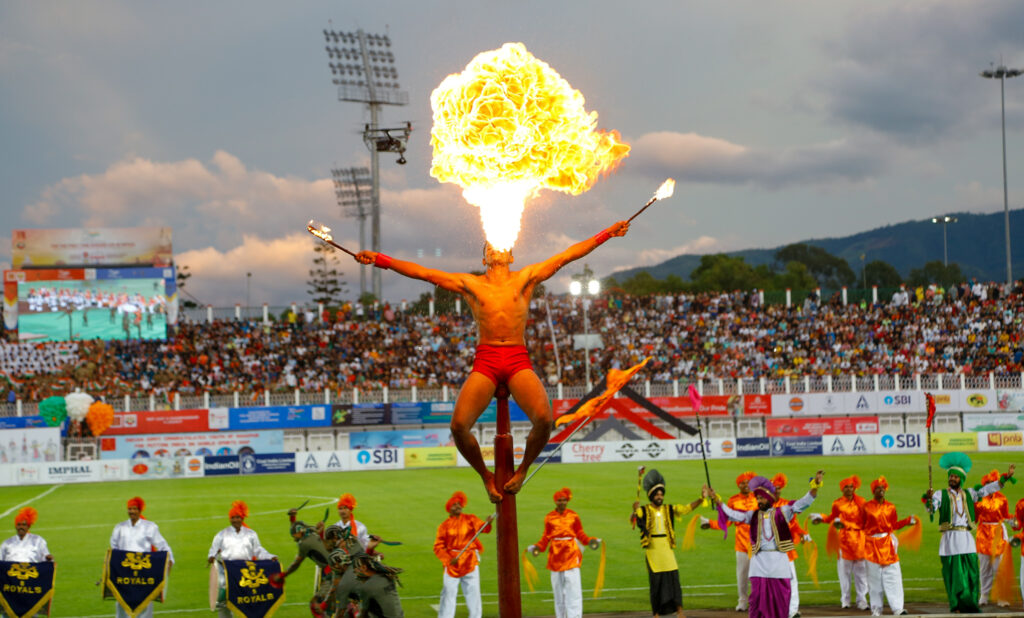
So long as the winds blow over Khuman Lampak, and so long as a child somewhere in Chandel, Bishnupur, or Ukhrul chases a torn football with dreams in his eyes, Manipur will remain India’s beating heart — and soul — of football.