Football
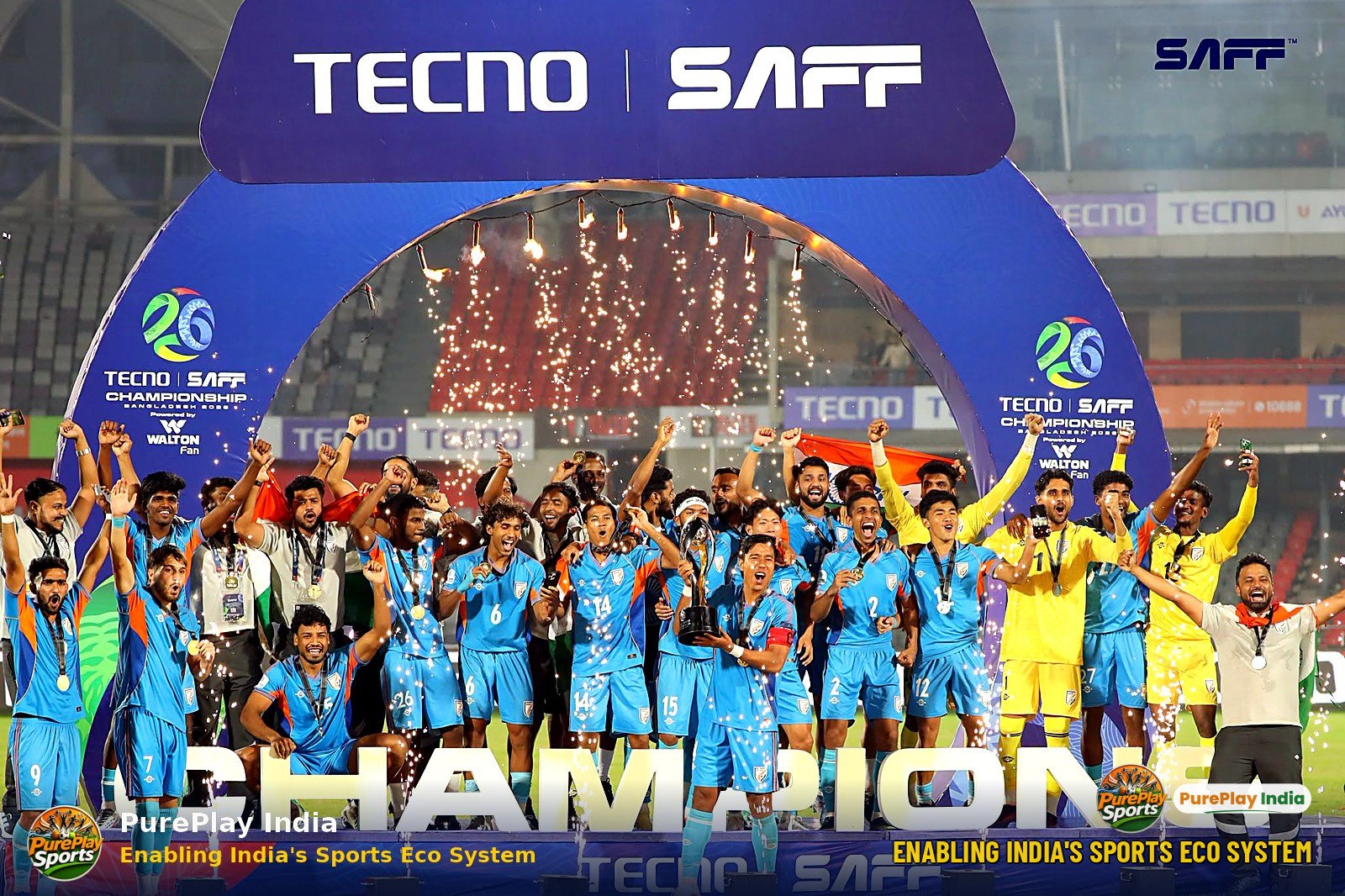
India 2-1 Pakistan: Second-string Blue Tigers win record 10th SAFF title

SAFF CHAMPIONSHIP 2026 · FINAL
India 2-1 Pakistan: Second-string Blue Tigers win record 10th SAFF title
Down at half-time, up against a reinforced Pakistan, a young India side won the SAFF Championship final. Behind it is a youth pipeline that is now producing results.
National Stadium, Dhaka. 17 November 2026.
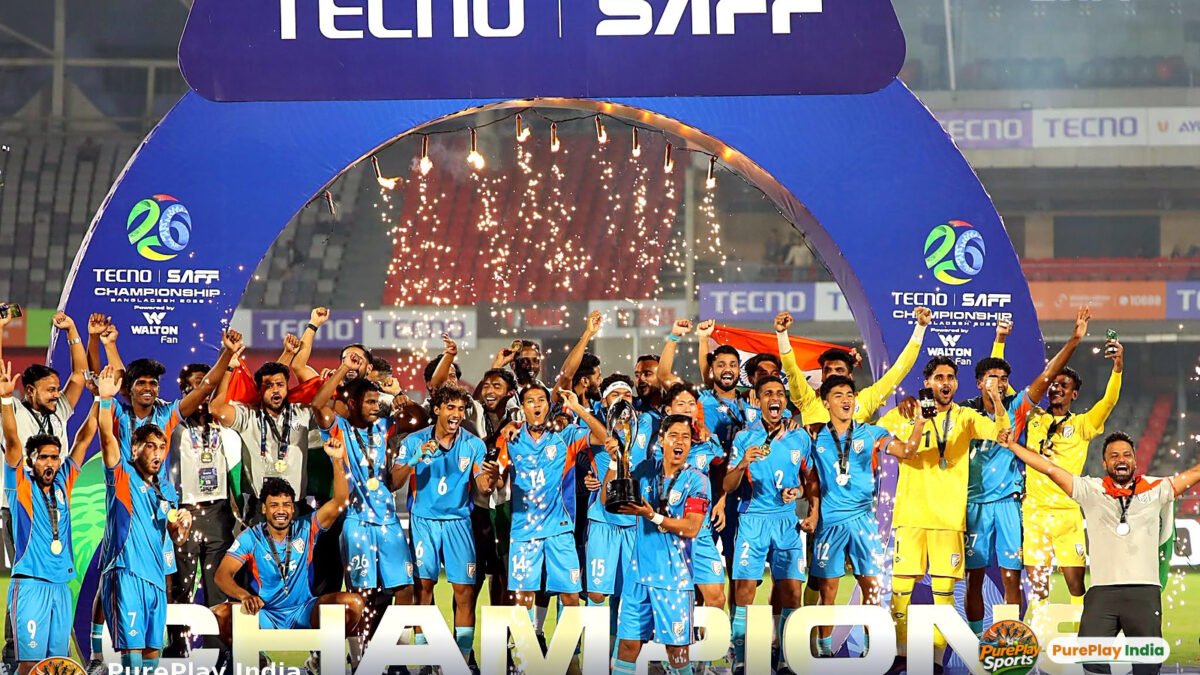
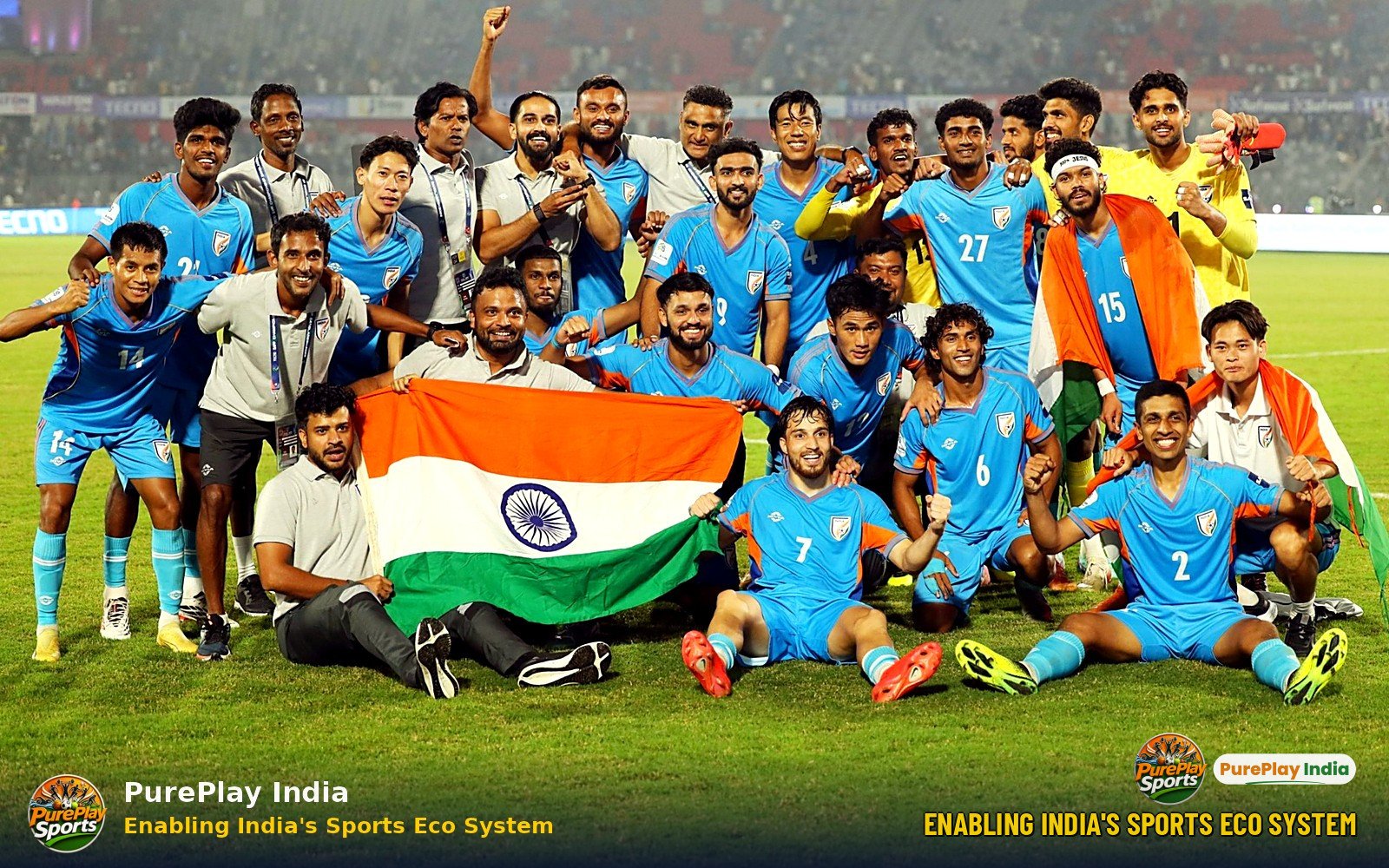
India’s second-string side beat Pakistan 2-1 in Dhaka on Tuesday to win the SAFF Championship final, claiming a record 10th title and, for the first time, three in a row. Down 1-0 at half-time and facing a Pakistan side bolstered by overseas-based players, the Blue Tigers equalised two minutes after a Pakistan red card and won it through Sandip Mandi in the 88th minute.
The SAFF Championship final: a goal down, then a red card changes everything
The Blue Tigers had to come from behind. Pakistan, playing in their first senior final, took the lead in first-half stoppage time: Alamgir Ali Khan Ghazi finished in the far corner after a cross from the left by Junaid Shah deflected off an Indian player (45+1′). According to Daily Jagran, Pakistan had the better of the opening half-hour, with nine shots to India’s two.
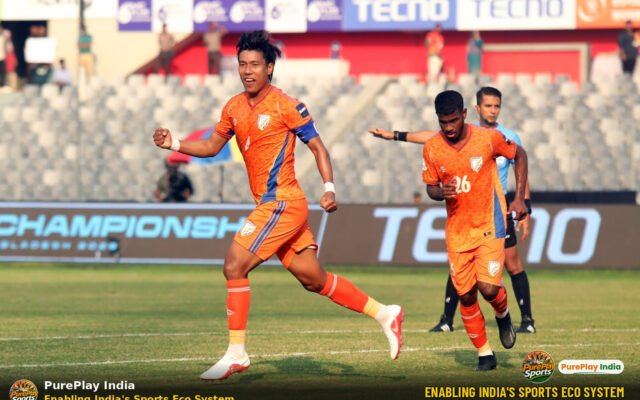
The match turned in the 58th minute. The official match report records a red card for Shah, the player who had set up Pakistan’s goal, for a challenge on India midfielder Brison Fernandes. Two minutes later India were level. Khaiminthang Lhungdim sent a free kick into the box, Macarton Nickson got a touch, and Suhail Ahmad Bhat side-footed it in (60′).
The winner came in the 88th minute. Sandip Mandi, India’s defender, scored after sustained pressure; Gulf News describes it as a header. The match report also shows him booked in the same minute. Pakistan, who finished with ten men for more than half an hour, had no answer, and Easah Suliman was booked in stoppage time as they pushed for an equaliser.
| Minute | Event | Team | Score |
|---|---|---|---|
| 45+1′ | Goal: Alamgir Ali Khan Ghazi | Pakistan | 0-1 |
| 58′ | Red card: Junaid Shah | Pakistan | 0-1 |
| 60′ | Goal: Suhail Ahmad Bhat | India | 1-1 |
| 88′ | Goal: Sandip Mandi | India | 2-1 |
A different Pakistan: the overseas factor
This was not the Pakistan side India beat 3-2 in the group stage. Pakistan’s overseas-based players missed the opening SAFF Championship matches because the tournament sat outside the FIFA window. Head coach Nolberto Solano said the diaspora players could not be brought in for the early part of the competition. The Express Tribune reported that five overseas-based players, Abdul Samad Shahzad, Ali Akbar Khan, Abdullah Iqbal, Easah Suliman and Adil Nabi, joined the squad in Dhaka after the group stage.
All five started the final. So did England-born Mckeal Aroon Abdullah, who was a first-time call-up. That means at least six of Pakistan’s starting eleven in the final were overseas-based or England-born. This was a stronger side than the one that began the competition, and they had just knocked out hosts Bangladesh 1-0 in the semi-final. India still beat them.
A second-string SAFF Championship squad, but not a second-rate performance
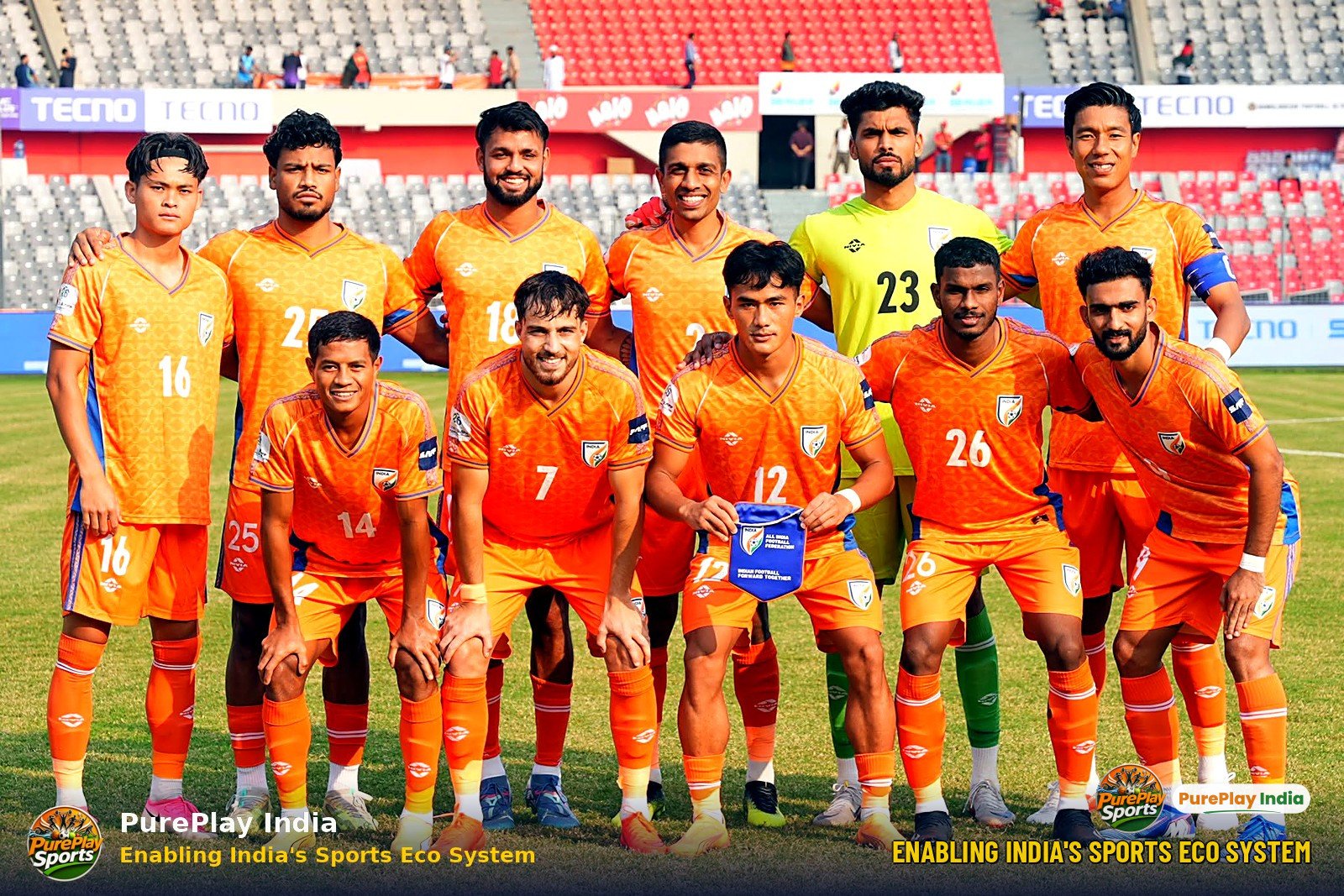
India’s first-choice players were away on senior international duty in New Zealand, so head coach Naushad Moosa named a 28-man SAFF Championship squad of club players from the Indian Super League and I-League, many of them with little or no international experience. Pre-tournament squad listings show several of them without a senior cap, and the Maldives match was goalkeeper Priyansh Dubey’s first start for India.
Suhail Ahmad Bhat, 21, finished the tournament with four goals in India’s four matches: two in the 3-2 win over Pakistan on 5 November, a penalty against the Maldives, and the equaliser in the final. Manglenthang Kipgen scored in the opener, and in the semi-final Vishnu PV and captain Chinglensana Singh Konsham scored in a 2-1 win over Bhutan. Arsh Anwer Shaikh kept goal in the final.
Moosa credited “the hard work, commitment and collective effort” of the players and support staff after the semi-final. He also kept a settled core between the semi and the final, which showed in the way India recovered from going behind.
The youth pipeline behind the SAFF Championship win
India’s run at the SAFF Championship is not an isolated result. In October, the AIFF’s U15 boys played the inaugural FIFA U15 World Cup & Festival in Baku. They finished 87th of 189 nations with five wins, one draw and four defeats, scoring freely: R Lalremruatfela finished with nine goals. They beat Cameroon 2-1, came from 2-0 down to beat Trinidad and Tobago 3-2, and ended the campaign with a 6-4 win over Cuba. FIFA president Gianni Infantino called them “a very, very strong team” in a video message.
The path to that squad was built over two seasons. The AIFF assessed more than 12,000 boys, with a network of 60 scouts, open state-level trials and central trials for 365 players at the AIFF-FIFA Talent Academies in Bhubaneswar and Hyderabad. The U15 coach, Bibiano Fernandes, is also listed as assistant coach on Moosa’s staff in the official match report for the final.
160 in Bhubaneswar · 205 in Hyderabad
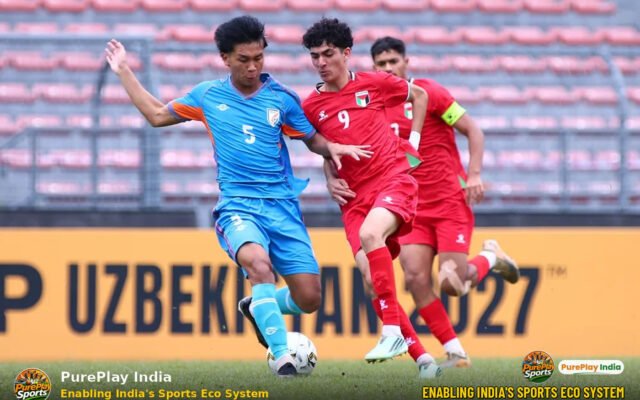
Then came the U17s. In the AFC U17 Asian Cup Qualifiers in Kuala Lumpur, Mehrajuddin Wadoo’s side beat Singapore 4-2, Guam 12-0 and Palestine 4-1, a total of 20 goals scored and three conceded in three games, which puts India in pole position for the AFC U17 Asian Cup Uzbekistan 2027 ahead of their meeting with Malaysia on Friday, 20 November.
Captain Chinglensana: the calm at the heart of the SAFF Championship run
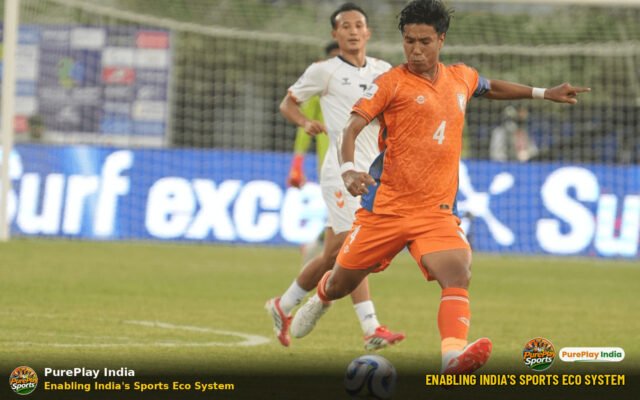
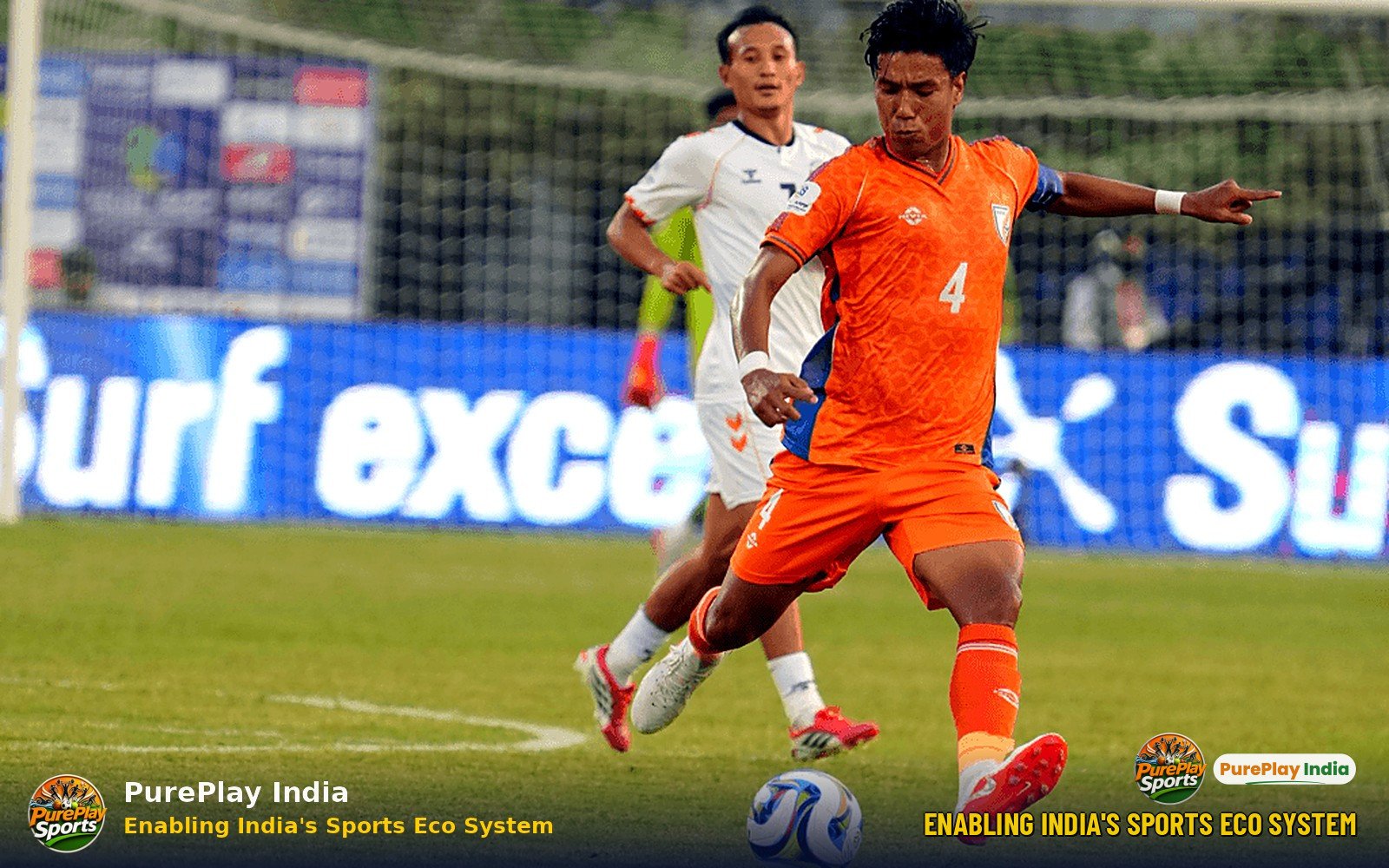
Chinglensana Singh Konsham wore the armband through the tournament, and it showed in how India reacted when things went against them. In the final they went into the break a goal down and then had to manage a game against ten men without losing their shape. In the semi-final against Bhutan he scored India’s second goal from a corner in the 27th minute, and Khel Now rated him 9 out of 10 and called him India’s best player on the pitch.
What stands out is his composure. He does not rush or panic, and he starts attacks from the back with his passing. In this desk’s view, his ball-playing ability makes him second to none among centre-backs in India.
He turns 30 later this month, but centre-back is a position where players last. Paolo Maldini won the Champions League with AC Milan at 38 and retired at 40. Giorgio Chiellini played at the top level until he retired at 39. Pepe played at Euro 2024 and retired at 41, and Thiago Silva was still playing at 41. Defenders who read the game and play with their heads tend to age well, and there is every reason to think Chinglensana has several more years at the highest level for India.
What the SAFF Championship’s diaspora-heavy squads tell us
Three of the six teams in Dhaka leaned heavily on overseas-based or “origin” players. Pakistan started at least six of them in the final. Bangladesh started eight overseas-based players in their semi-final against Pakistan, and seven in their 4-0 group win over Sri Lanka, according to Daily Waadaa. Sri Lanka’s 28-man squad listed about 20 players at clubs outside Sri Lanka, in countries such as Germany, Australia, Norway and England. That figure is based on where the players’ clubs are, not where they were born.
The results are worth setting side by side. Bangladesh, with eight overseas-based starters, lost 1-0 to Pakistan in the semi-final. Sri Lanka went out in the group stage after a 4-0 loss to Bangladesh and a draw with Bhutan. Pakistan reached their first final and lost it to an India squad with no overseas-based players among the 28 listed. Bhutan, whose squad plays at home, reached the semi-final and lost 2-1 to India.
It is not a clean rule, and we should say so. Pakistan’s overseas players were the reason they reached the final, and Maldives, with an all-domestic squad, lost both of their group games. But the argument that India needs to import its way to the top is hard to make from this tournament. A domestic squad, and a young second-string one at that, won the title.
There were signs of a physical gap in the final. Pakistan’s overseas-based players looked stronger and sharper in the first half, when Pakistan had the better of the chances. But football is not only about strength. It is also tactics, organisation and the will to win, and India showed all three: they stayed in the game, levelled within two minutes of the red card, and kept pushing until Mandi won it.
In conversation with PurePlay India, AIFF Technical Director Syed Sabir Pasha said the federation’s long-term plan is to develop and rely on Indian coaches. The pieces are visible: Naushad Moosa with the senior squad, Bibiano Fernandes with the U15s and Mehrajuddin Wadoo with the U17s. This desk is not 100 per cent convinced that India is moving fast enough to catch the leading Asian teams. But the direction looks right, and all good things take time.
SAFF Championship history: a record 10th title and a first three-peat
The AIFF noted before the final that India had never won three successive SAFF Championship titles. Now they have: 2021, 2023 and 2026. The record tenth title also extends the list of India’s wins: 1993, 1997, 1999, 2005, 2009, 2011, 2015, 2021, 2023 and 2026. Pakistan, who had reached a senior SAFF final for the first time, finished runners-up.
For Pakistan, reaching a first final after four semi-final exits was itself a landmark for the programme. For India, the SAFF Championship result is a reminder of how deep the player pool now runs.
Syed Sabir Pasha knows the SAFF Championship: a winner as a player, now the man behind the pipeline
The Technical Director has been on this stage before. Syed Sabir Pasha, a forward from Chennai, scored the only goal of the 1995 South Asian Federation (SAF) Games final against Bangladesh at the Jawaharlal Nehru Stadium in Chennai on 27 December 1995, a 1-0 win that gave India the gold medal. He was also part of the India side that won the 1999 SAFF Championship, one of the ten titles on the list above.
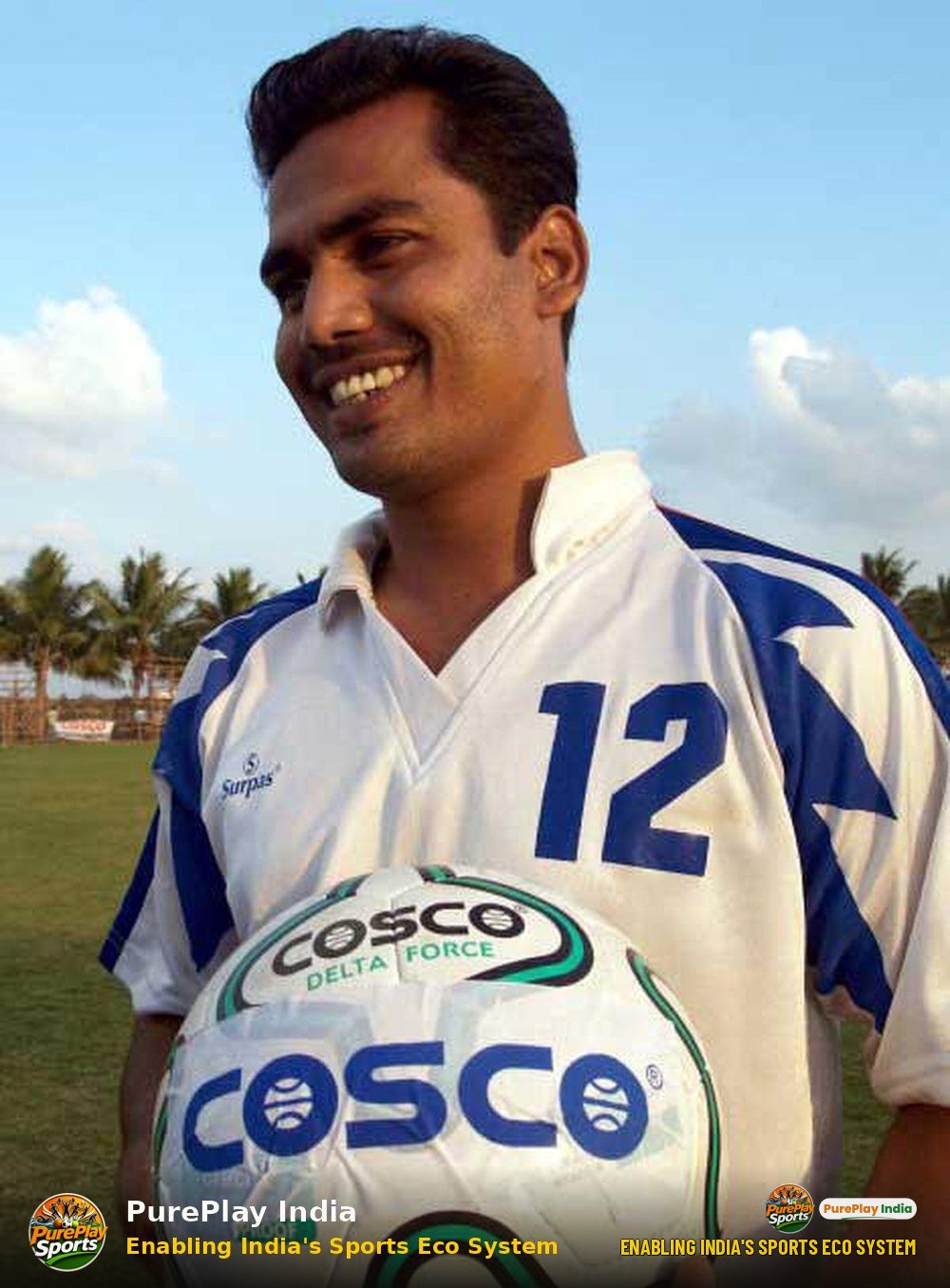
His playing career was long and mostly spent at home. He was with Indian Bank from 1991 to 2007 and was Tamil Nadu’s top scorer at the Santosh Trophy in 1996 and 1999. He then moved into coaching, taking Tamil Nadu to the 2012 Santosh Trophy final, running the AIFF Elite Academy from 2014 to 2016 and working at Chennaiyin FC’s grassroots programme before taking the technical director’s post.
That background matters for how this result reads. The man who now oversees the pathway that produced the U15s, the U17s and this SAFF Championship squad is someone who knows what it takes to win this tournament on the pitch, and who came up through the Indian game rather than around it.