
Uncategorized
India’s defence needs its playmaker: Jamil must trust Chinglensana

EDITORIAL · INDIAN FOOTBALL
India’s defence needs its playmaker: Jamil must trust Chinglensana
Fans celebrate the scorers. India’s problem is at the other end, and a centre-back who passes like a playmaker is part of the answer.
Chinglensana, ISL 2026-27, first four starts. Source: FotMob.
Football fans celebrate the goalscorers. India’s bigger problem is at the other end: a defence that conceded 18 goals in four matches against Brazil, Uruguay and New Zealand, and a team without a clear leader on the pitch. Chinglensana Singh Konsham, a centre-back who plays like a deep-lying playmaker, was on Khalid Jamil’s standby list. After everything he has been through, he deserves the callback.
Attack wins games, defence wins titles
Football crowds remember the scorer. The defender who ended three attacks in the same minute rarely gets a chorus, and in India, where the audience is still learning the finer points of the game, that gap can be wider. Sir Alex Ferguson is credited with the line that attack wins you games and defence wins you titles. A 2017 Premier League analysis by Sky Sports’ Adam Smith, which started from that line, found the numbers do not fully back it: most champions have had stronger attacks than defences. Fair enough.
India’s problem is more basic than winning titles. It is the shape of the game. In the October and November window, Khalid Jamil’s senior side conceded 18 goals in four matches: 4-0 against Brazil, 6-1 against Uruguay, and 5-0 and 3-0 against New Zealand. Those opponents are far above India, and no one should read a lesson into every goal. But the match reports describe a pattern. Khel Now’s analysis of the Brazil game points to lapses in concentration, individual errors and full-backs left exposed. Uruguay’s opening goal came from a penalty in the 11th minute, awarded after 19-year-old Pramveer was adjudged to have fouled Federico Viñas, and the report says India were caught out defensively for the second.
India needs a back line that can handle the press, keep its shape and start the next attack. The man best suited to lead that, in our view, was only on Jamil’s standby list for the Brazil and Uruguay window.
The centre-back who plays like a deep-lying playmaker
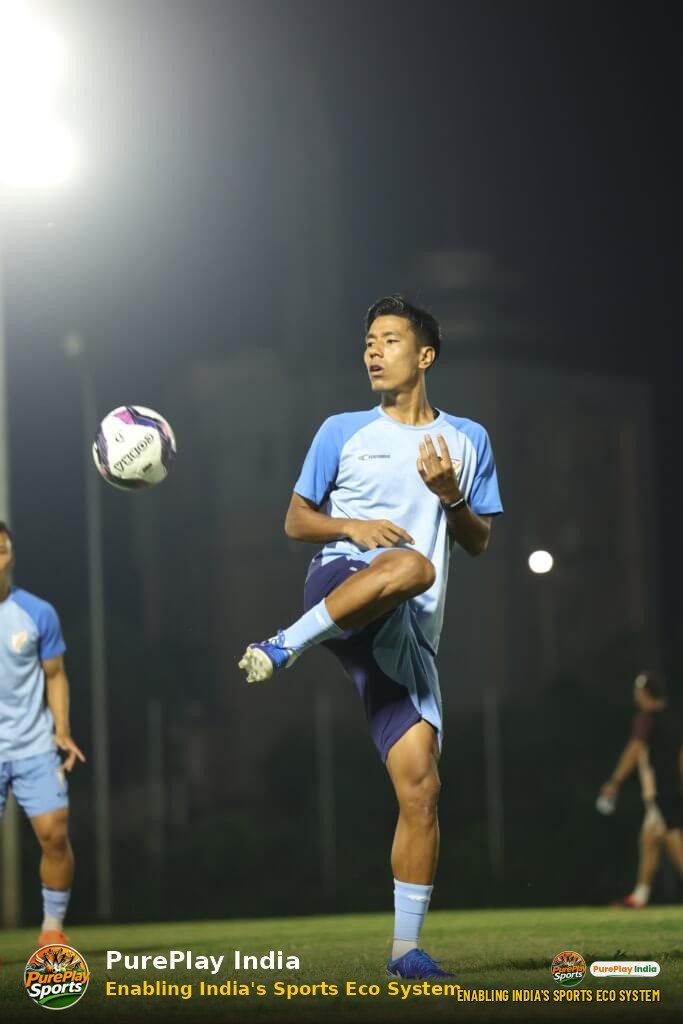
Chinglensana Singh Konsham is a centre-back first: 1.86 m, and ISL commentator Erik Paartalu has called him good in the air with a good tackle. The Indian Super League’s own profile says he is not the quickest, and that he makes up for it with positioning and his reading of the game. But what separates him is what he does with the ball. He is a ball-playing defender who can play out from the back, with a wide range of passing, and he can switch play with a long diagonal. Not many centre-backs in India can do that consistently.
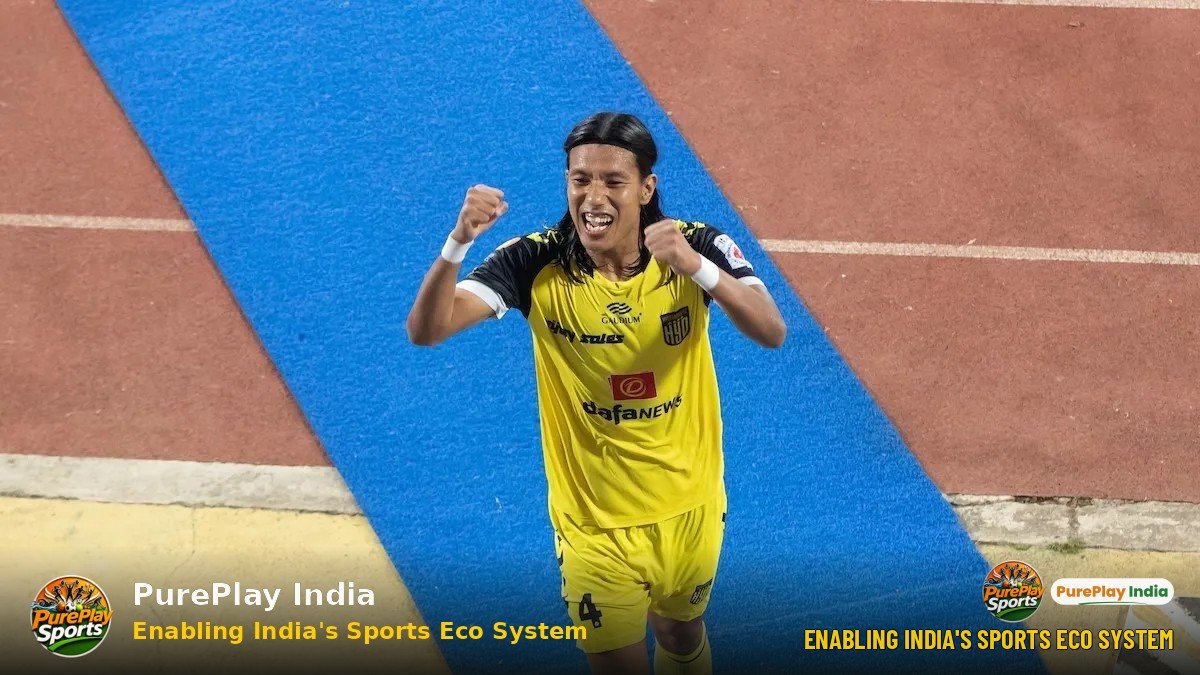
It is a style he was taught. He spent four years at the Tata Football Academy, where coaches from Sheffield United, including Lee Walshaw, trained the players and took them to England. “I was taught not to clear the ball just for the sake of clearing it,” he told Sportskeeda. That is the whole case for him in a sentence. A defender who clears under pressure gives the ball back. A defender who plays through the press gives his team the next attack. In the ISL, he said, the Spanish coaches he has worked under, Sergio Lobera and Manolo Márquez, stress the same thing: regaining the ball and keeping possession.
The same instincts were visible when he was 20. A Red Bull profile in 2017 described him as calm and composed on the ball and keen to play out from the back, a centre-back who studied Per Mertesacker, Rio Ferdinand, Nemanja Vidić, Raphaël Varane and Jamie Carragher for the way they read the game, with Sergio Ramos as his idol. By then he had already made three debuts in 2016: for Shillong Lajong in the I-League, for Delhi Dynamos in the ISL and for India in an unofficial friendly against Bhutan.
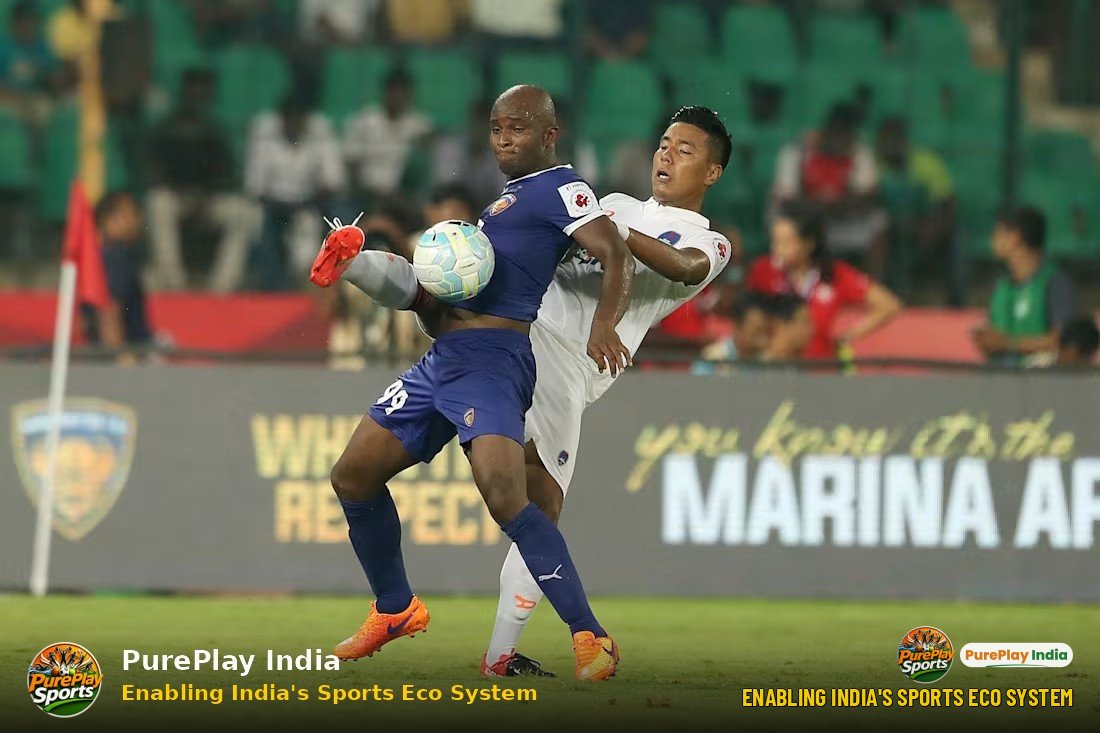
The numbers have kept pace. In the 2020-21 ISL season, according to the league’s official statistics, he averaged 41.17 passes a game at 84.34 per cent accuracy. In his first four starts of the 2026-27 season for Bengaluru FC, FotMob has him completing 94.3 per cent of his passes, 246 of them successful, and finding 25 accurate long balls at a rate of 78.1 per cent, alongside 14 clearances and 3 of 3 aerial duels won. These are different samples, but a ten-point gain in passing accuracy at 29 is not the profile of a player in decline. Khel Now rated him 7 out of 10 in the 2-0 win over Chennaiyin FC on 17 October, crediting well-timed clearances and accurate long balls, and gave him a 7 again in Bengaluru’s 2-1 win at FC Goa on 6 November, calling him solid at the back and a real threat at set pieces.
| Measure | Figure |
|---|---|
| Appearances (all starts) | 4 (360 minutes) |
| Pass accuracy | 94.3% (246 successful) |
| Accurate long balls | 25 (78.1%) |
| Clearances | 14 |
| Aerial duels won | 3 of 3 |
| Clean sheets | 1 |
Rated by the coaches who have worked with him
He is often underrated at home, but not by the people who coach him. When Bengaluru FC signed him on 30 January 2024, Spanish coach Gerard Zaragoza, whose first signing at the club he was, said Sana is “one of the best Indian centre-backs with the ball” and that this is important to Bengaluru’s style of play. Manolo Márquez, who coached him for three seasons at Hyderabad FC, said his level was improving day by day and that his attitude was always fantastic. In Márquez’s first match as India coach, against Mauritius on 3 September 2024, Chinglensana started, and Márquez was impressed with the defensive display. Before that, Sportskeeda noted, his ability to play out from the back was central to Igor Stimac’s plan for India, and Stimac gave him his debut against Oman in March 2021.
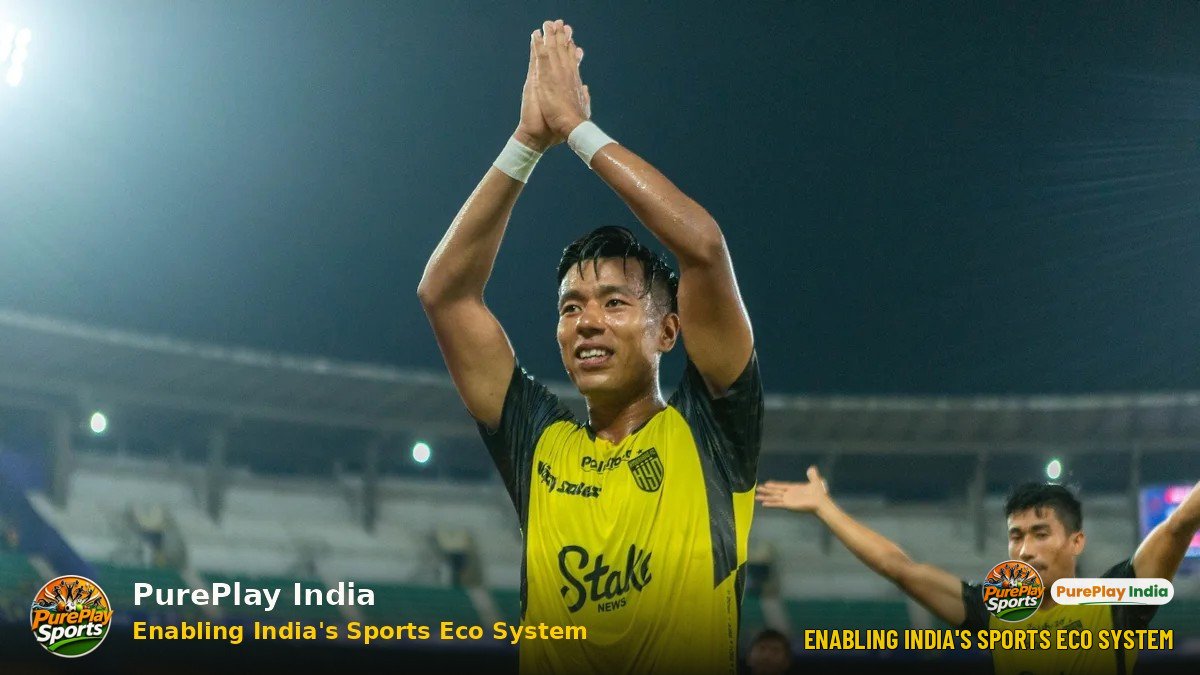
The Hyderabad years were the peak so far. He was ever-present when Hyderabad won the Indian Super League in 2021-22, and by December 2022 he had kept six clean sheets, the most in the league, as Hyderabad topped the table. Former India player Darren Caldeira called him one of the best Indian centre-backs right now, and his then Hyderabad teammate Akash Mishra called him one of the best ball-playing defenders in India. Those are the views of people who watch and work with him closely.
India with Chinglensana, India without him
The record points the same way. From his debut against Oman on 25 March 2021 to the SAFF Championship final on 17 November 2026, India have played 72 official senior matches, winning 23, drawing 22 and losing 27. By this desk’s count, Chinglensana appeared in 17 of them, and India’s record in those 17 is nine wins, five draws and three defeats. Without him it is 14 wins, 17 draws and 24 defeats in 55. Penalty shootouts are counted as draws.
| Played | W | D | L | Win % | Unbeaten % | |
|---|---|---|---|---|---|---|
| With him | 17 | 9 | 5 | 3 | 52.9 | 82.4 |
| Without him | 55 | 14 | 17 | 24 | 25.5 | 56.4 |
| All matches | 72 | 23 | 22 | 27 | 31.9 | 62.5 |
This is not a clean experiment, and we should say so. Seventeen matches is a small sample. Many of his games came in regional tournaments and friendlies against Nepal, Maldives, Bangladesh and Bhutan, while many of the 55 without him were against stronger sides, including the 2023 AFC Asian Cup and the World Cup qualifiers. The three defeats in his 17 were against Belarus and Vietnam in 2022 and Iran in 2025, each a 3-0 defeat. But a win rate more than double, and a team that goes unbeaten in four of every five games with him on the pitch, is a signal a national coach should at least ask about.
The years Manipur took, and the player who came back
His story has not run in a straight line. On 3 May 2023, the day violence broke out in Manipur, he was playing for Hyderabad FC against Mohun Bagan in Kozhikode. After the match he learned what he had lost back home. He told PTI that his house in Churachandpur had been burned, along with the football turf he had built there so that talented children who could not afford football school would have a platform to turn professional and perhaps one day play for India. His family had escaped to a relief centre, and he said they would try to start again.
He then missed a year and a half of international football. His last India appearance before the gap was the Tri-Nation Series in Imphal in March 2023, and he did not return until the Mauritius match in September 2024, according to the AIFF. He was 26 when he left and 27 when he came back. In our view those were some of what should have been his peak years for India, and he lost them for reasons that had nothing to do with football.
Continuity matters more than any single performance. A national team is built on repetition: the same partnerships, the same patterns, the same understanding of who moves when the opponent presses. A centre-back depends on that more than anyone, because his job is to read the game together with the players around him. India played 22 official matches during his absence, including the 2023 SAFF Championship title, the Intercontinental Cup and the AFC Asian Cup in January 2024, and the back line he had been part of in 2021 and 2022 moved on without him. When he returned he had to start again. Since that return in September 2024 India have played 29 official matches, and by this desk’s count he has appeared in six. A defender who is picked once a season cannot build the understanding the position demands. The first gap was not of his making. The second should not be allowed to continue.
In March 2022 he told the Indian Super League, “I believe my best years are still ahead of me.” At 25 it sounded like ambition. At 29 it sounds like a fair description. He captained India at the SAFF Championship, his passing numbers are better than in 2020-21, and he is playing for a Bengaluru side that has started the season well. He also said in that interview that there is no such thing as a permanent spot in the national team, which is the right attitude. Nobody is asking for a permanent place. We are asking for a callback, which he has earned.
Jhingan’s absence and the leadership gap
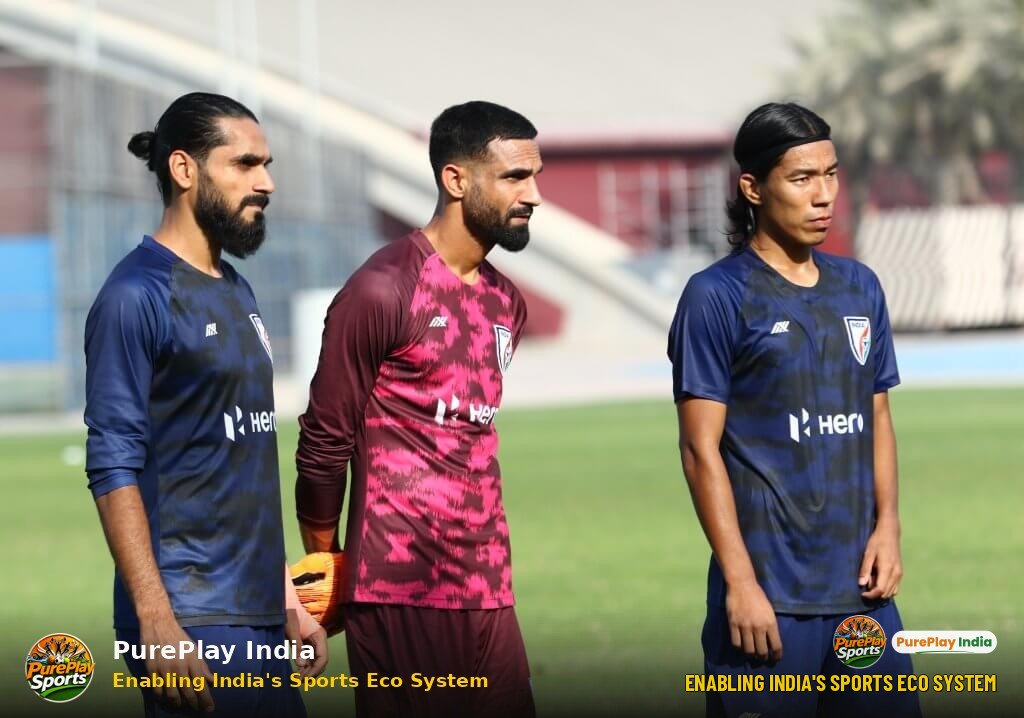
The timing matters. Sunil Chhetri has retired, and Sandesh Jhingan, India’s long-time defensive leader and a former captain, was left out of Jamil’s 26-man squad for the Panama, Brazil and Uruguay friendlies, and was not recalled for the New Zealand games even after Anwar Ali’s injury. Jhingan has 77 caps, is playing well for FC Goa, and told the Times of India that when he saw the list it was disappointing, but that he respects the coach’s decision. Selection is the coach’s call, and this is not an argument about Jhingan. It is about what the call leaves behind.
India has had this partnership before. In August 2021, when Jhingan was about to join HNK Šibenik in Croatia, a 24-year-old Chinglensana, who had recently played alongside him in India’s back line, told AIFF TV that Jhingan “has opened the door for us” and was “a great person and partner to play alongside”. Whatever Jamil decides about Jhingan, the point is that the position needs leaders, and Chinglensana is the one who has already worn the armband for India.
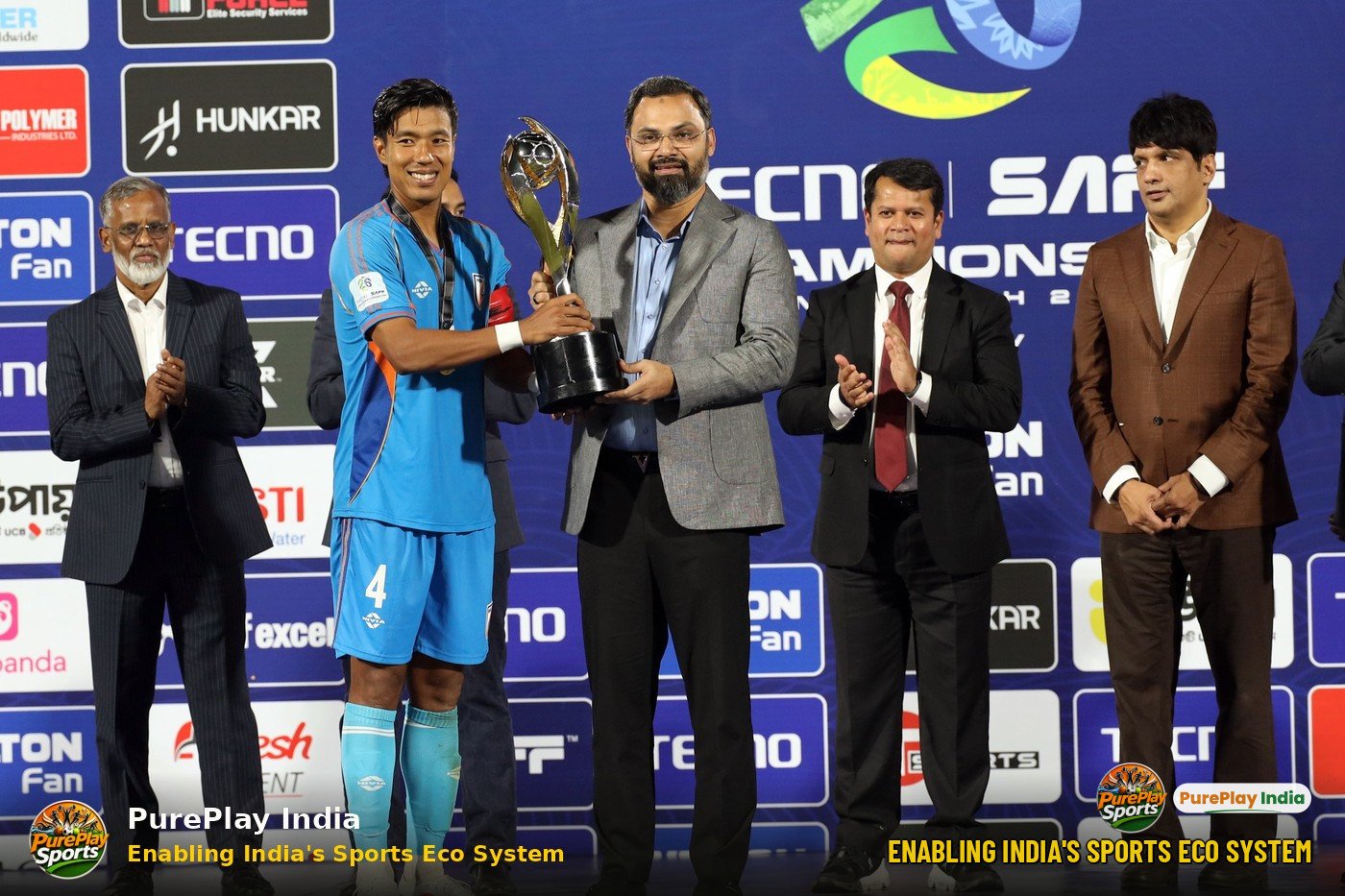
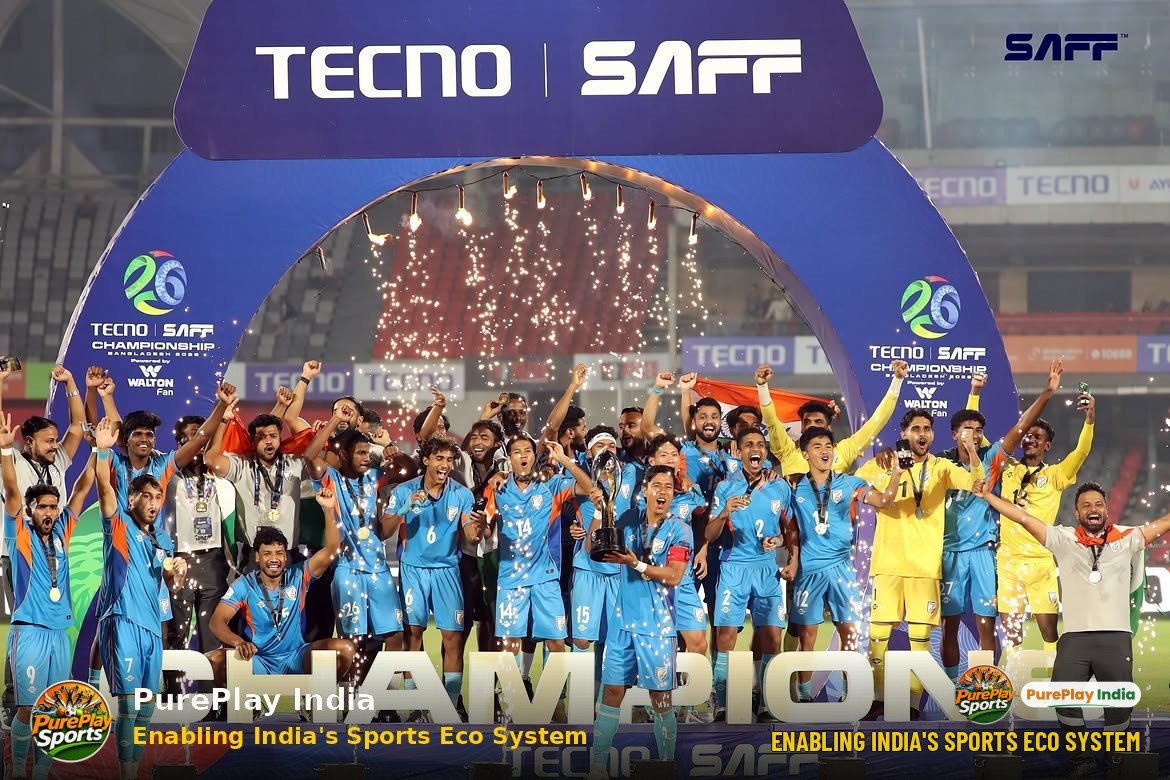
Outlook India described Jhingan’s absence as removing one of the team’s clearest leaders at the back. Against Uruguay the armband was worn by goalkeeper Gurpreet Singh Sandhu. A goalkeeper is a fine leader, but he sees the game from behind. The player who organises a defensive line, calls the press and resets the shape is a centre-back. Chinglensana has named the problem himself. Recalling India’s 3-0 defeat in Vietnam in 2022, he said in 2024 that the team “started the game really well, but after conceding, we became disorganised.” In Dhaka he captained a side that scored first, recovered from a goal down in the final, and won the title. He scored against Bhutan and was rated 9 out of 10 by Khel Now. SAFF Championship football is not the same test as Brazil, and we do not pretend it is. But India’s players followed him there.
A transition needs a bridge, not a clear-out
Jamil’s squad for the three friendlies averaged 26.24 years and was described as youth-centric. Eight defenders were named: Akash Mishra, Abhishek Singh Tekcham, Anwar Ali, Bijoy Varghese, Hmingthanmawia Ralte, Jay Gupta, Pramveer and Ricky Meetei Haobam. Chinglensana was on the standby list with Roshan Singh Naorem. A transition is the right instinct, and Jamil, announced as head coach on 1 August 2025 on a two-year contract with an option for a third, has time to build.
But a transition needs a bridge. A 19-year-old should not have to learn international centre-back play against Brazil and Uruguay without an experienced head beside him. Chinglensana turns 30 this month, an age at which centre-backs who read the game are often at their best, and he is not the quickest, which has never mattered because his game is built on positioning and the ball. He is neither old nor finished.
What Jamil should do
Give him the callback. Standby is not a plan. In the next window Chinglensana should be in the squad and, fit and in form, in the starting eleven.
Pair him with the young. Put him next to Pramveer, Ricky Meetei Haobam or Hmingthanmawia Ralte, so the next generation learns from a defender who has won the league and worn the national armband.
Build from the back, deliberately. If the coaching unit wants India to play out against the press, it needs a centre-back who is comfortable doing it. He is one of very few in the country.
Name a leader. Whether it is Chinglensana or someone else, the line needs an on-pitch captain who plays in front of the goalkeeper, not behind him.