
Indian Football Finally Trusts Its Own: Why Gouramangi Singh’s Appointment Could Be a Turning Point
By William Tekcham · Editor-in-Chief, PurePlay India | 16 min read
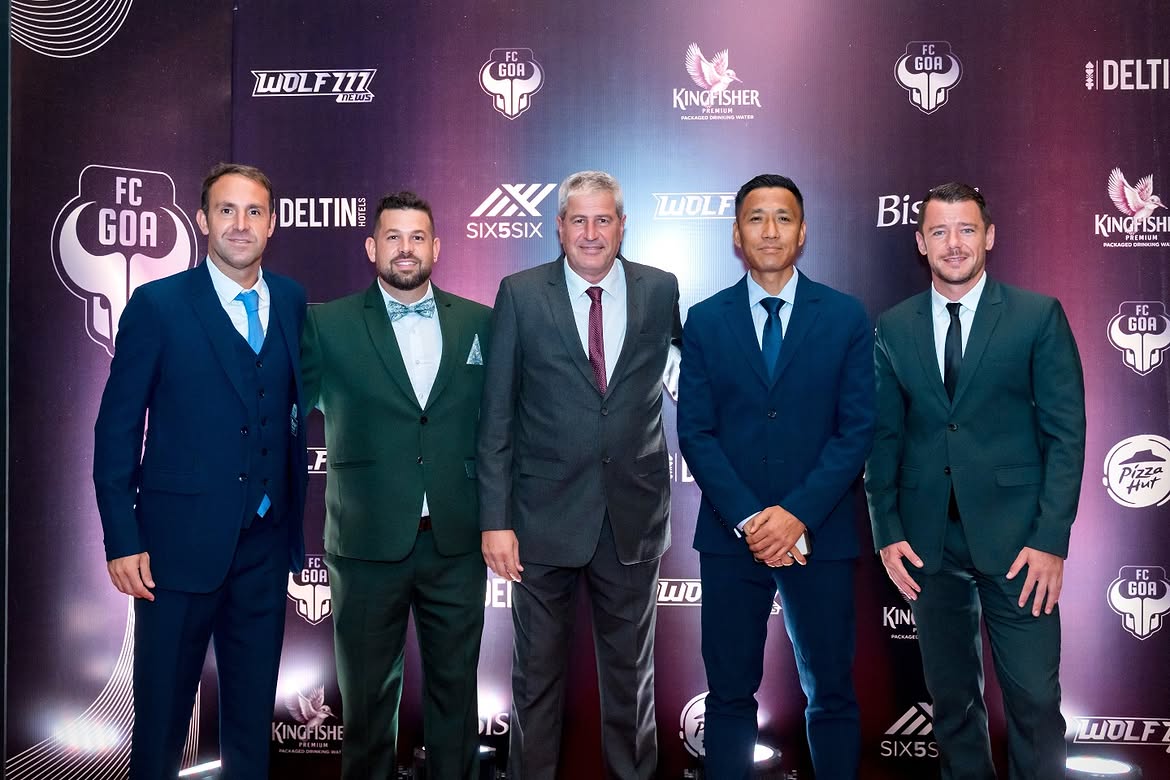
“This is not merely the story of one former India captain becoming a head coach. It is about something Indian football has quietly struggled with for decades — the confidence to trust its own football intelligence.”
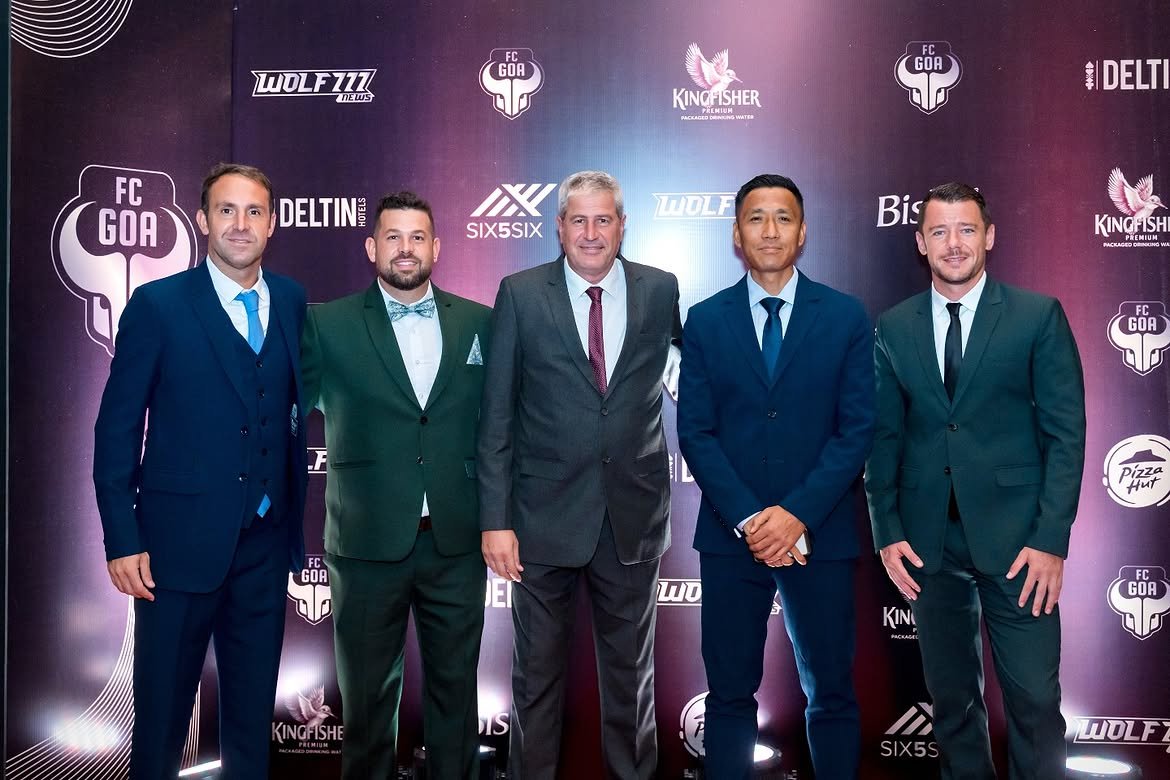
Moirangthem Gouramangi Singh
25 January 1986
Tata Football Academy product; 71 India caps, 6 goals; former captain
AIFF Player of the Year (2010); I-League Best Defender (2008-09); 2008 AFC Challenge Cup winner
Head Coach, FC Goa (2026 season)
FC Goa assistant coach since 13 July 2022, under Manolo Márquez
FC Goa’s first Indian head coach
For decades, Indian football has searched abroad for answers. European coaches, foreign sporting directors, imported philosophies and overseas expertise have all played an important role in the professionalisation of the game. But every football nation eventually reaches a point where it must ask a difficult question: When will we begin trusting our own football minds?
FC Goa’s decision to appoint Gouramangi Singh Moirangthem as its permanent head coach may appear, at first glance, to be another managerial appointment.
In reality, it may represent something much bigger.
This is not merely the story of one former India captain becoming a head coach.
Nor is it an argument that Indian coaches are better than foreign coaches.
Instead, it is about something Indian football has quietly struggled with for decades — the confidence to trust its own football intelligence.
For years, Indian football has celebrated its players while looking elsewhere for its thinkers.
Foreign coaches have understandably dominated the Indian Super League.
Many have brought professionalism, tactical innovation and valuable international experience.
Their contribution deserves recognition.
But one uncomfortable question has remained unanswered.
How will Indian coaches ever acquire similar experience if they are rarely entrusted with the biggest jobs?
That is why Gouramangi’s appointment matters.
Not because he is from Manipur.
Not because he is Indian.
But because he earned the opportunity.
The Player Before the Coach
To understand why FC Goa trusts Gouramangi Singh with its dugout, it helps to understand what he was, first, on the pitch.
He was scouted out of Awang Sekmai, a village in Imphal West, at fourteen, and in 2000 he joined the Tata Football Academy in Jamshedpur — for two decades the closest thing Indian football had to a national conveyor belt for talent, the same institution that produced the generation of Manipuri footballers who would go on to define Indian defending for the next fifteen years. He spent four years there sharpening the things a defender actually needs: positioning, tackling, timing in the air. At 1.86 metres, he had the frame for it.
He turned professional with Dempo SC in 2004-05. What followed was close to a clean sweep of Indian club football’s honours board: the National Football League and Federation Cup with Mahindra United in 2005-06, the I-League title in 2009, the I-League’s Best Defender award in 2008-09 while at Churchill Brothers, and the AIFF Player of the Year award in 2010 — the highest individual honour in the domestic game. He won 71 caps for India, scored 6 goals from central defence, captained the side in 2012 and 2013, and retired from international football after the 2013 SAFF Championship final.
Six international goals from a centre-back is not a typo.
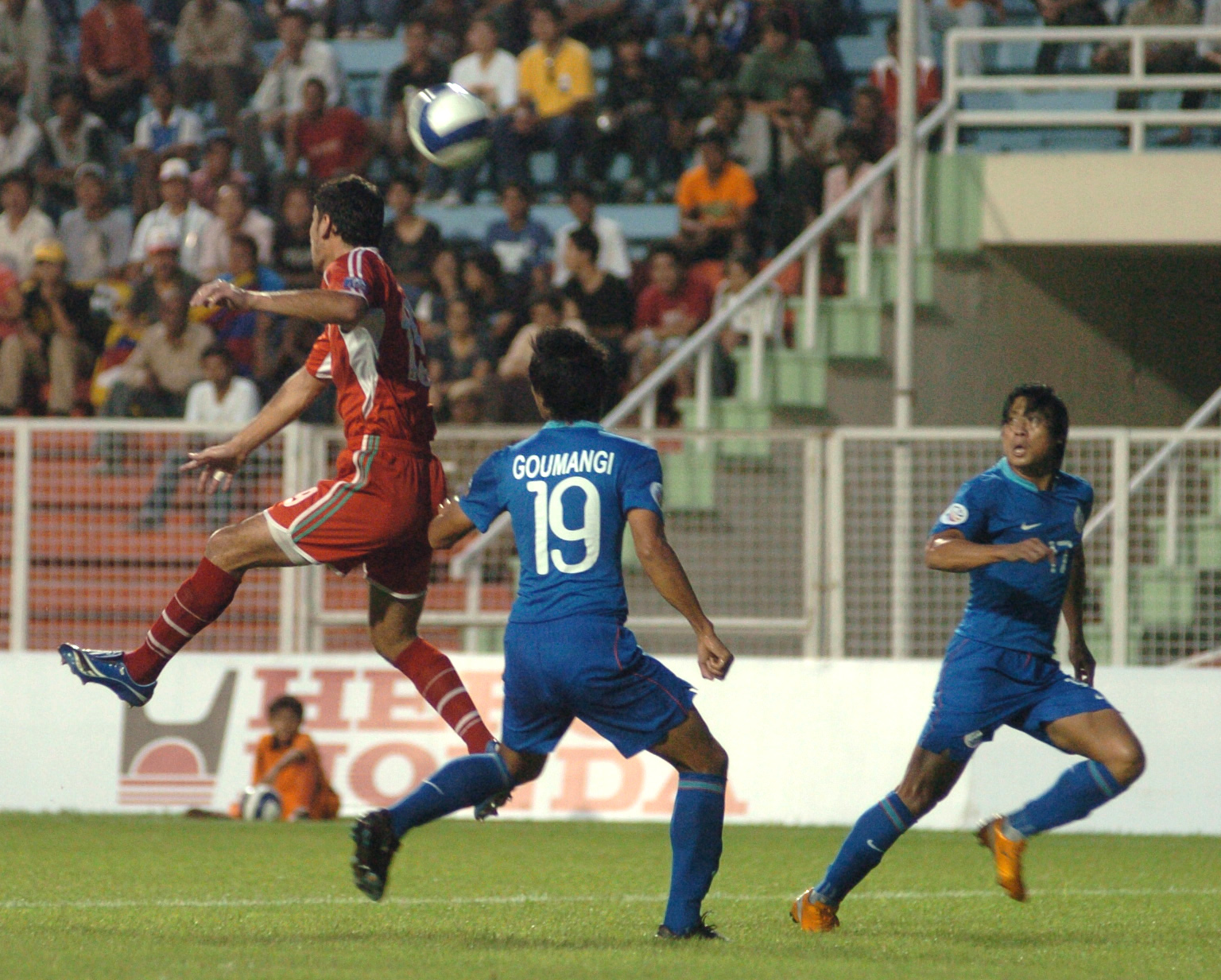
Gouramangi was, by the account of almost everyone who played alongside him, a rare thing in Indian football at the time: a centre-back who could defend the back post and win the ball in the air, but who was also comfortable enough in possession to be trusted with it. In one of his own interviews, he put it simply — defending was the job, but scoring goals was what gave him the confidence to do it.
He had not always played there.
For most of his early career, Gouramangi was a defensive midfielder — a holding presence in front of the back four, not part of it.
Bob Houghton changed that.
Houghton took over the Indian national team in June 2006 and built it around a very specific, very European tactical idea: zonal marking, a high defensive line, an aggressive offside trap, and swift transitions built on long, accurate diagonals into the channels rather than short buildup through midfield. It was a system with a strong physical preference — a system that lived or died on its centre-backs. They had to defend space, not just markers. They had to win the ball in the air, over and over, against taller and more physical Gulf and Central Asian forwards. And they had to be composed enough on the ball to start the counter themselves with a raking long pass.
Houghton did not find that profile among India’s existing centre-backs. He found it in his holding midfielder.
One evening, by Gouramangi’s own account, Houghton simply told him he would be playing centre-back from now on. He also told him to keep joining the attack at set pieces rather than staying back as insurance. Gouramangi did not ask to be moved. He was moved, and the move remade his career: the I-League Best Defender award followed, then the AIFF Player of the Year award, then the 2008 AFC Challenge Cup — India’s first continental title in the professional era, a 4-1 defeat of Tajikistan that sent the team to the 2011 Asian Cup for the first time in twenty-seven years — and a Nehru Cup won in 2007 along the way.
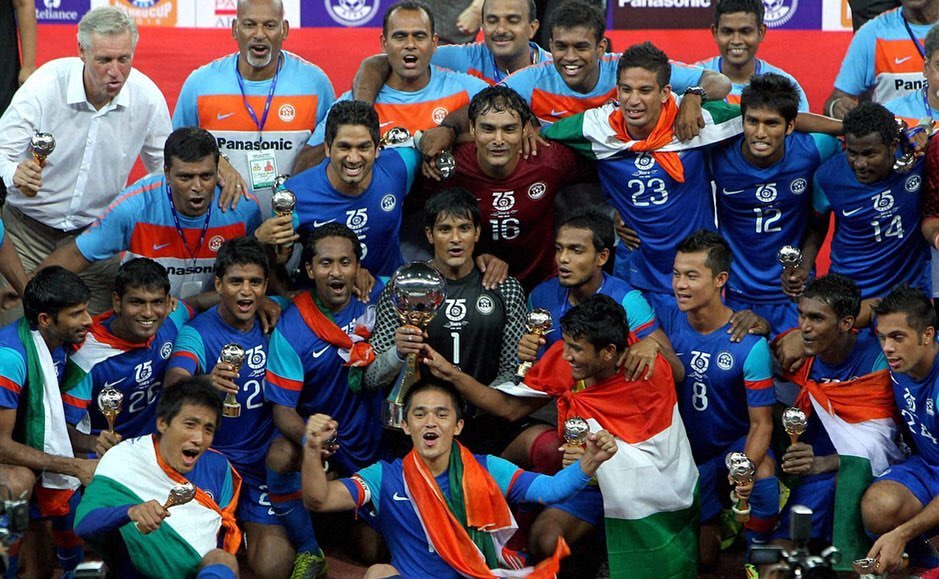
A coach looked at a player, saw something in him that the player’s own history didn’t obviously suggest, and trusted that read completely enough to rebuild a career around it.
FC Goa is now making the same bet on Gouramangi that Gouramangi once benefited from.
More Than Just Another Coaching Appointment
The easiest way to interpret FC Goa’s announcement is to view it as a symbolic appointment.
That would be a mistake.
Successful football clubs rarely make appointments based on symbolism.
They appoint people they believe can help them win.
FC Goa’s decision appears to reflect continuity rather than sentiment.
Gouramangi has spent years working within the club’s football structure.
He understands its academy.
Its philosophy.
Its players.
Its culture.
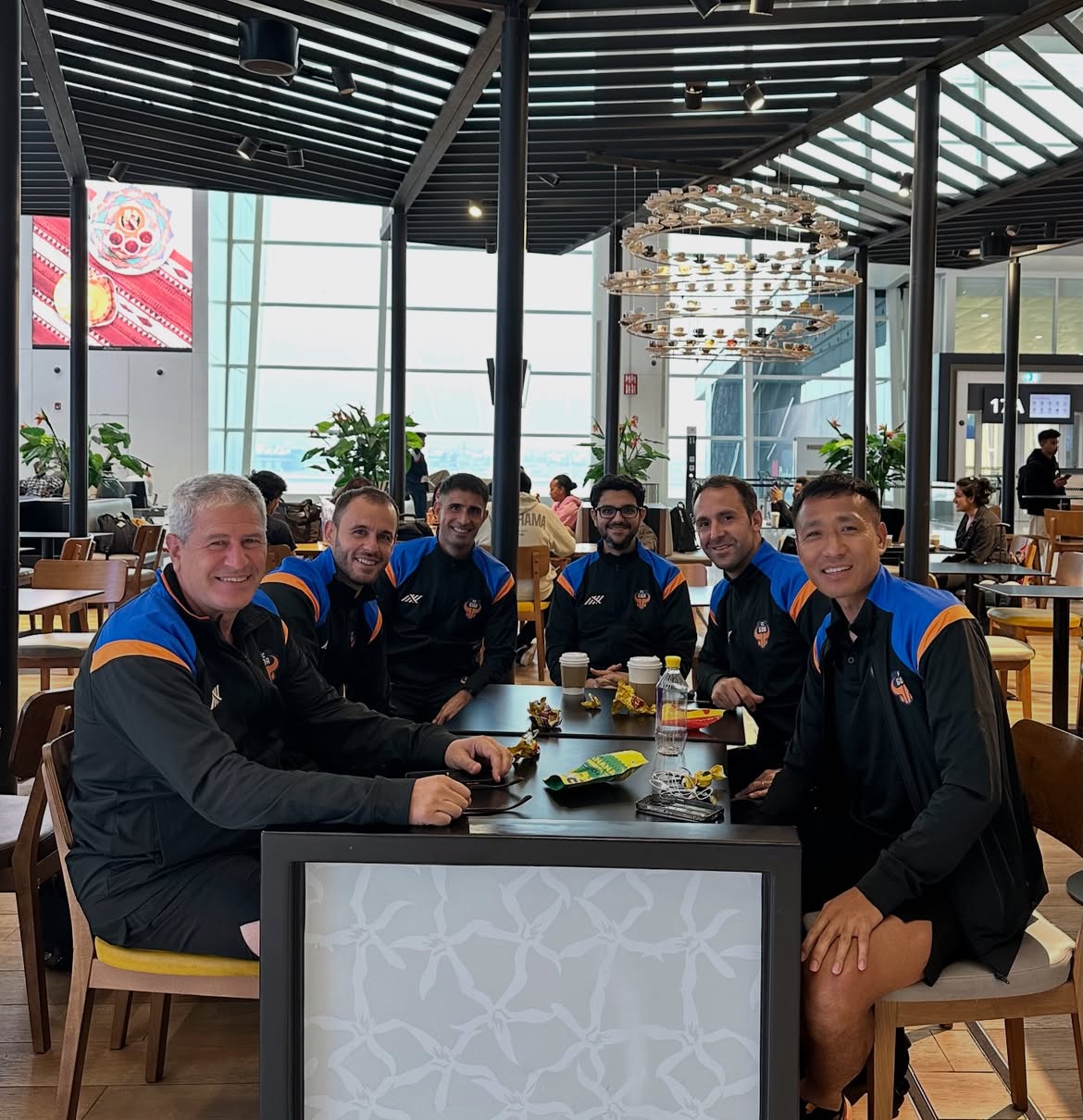
He was appointed FC Goa’s first-team assistant coach on 13 July 2022, initially under Derrick Pereira. When Manolo Márquez took over as head coach in June 2023, Gouramangi stayed on — and spent the next three seasons as Márquez’s assistant, a stretch that included a period when Márquez combined the Goa job with coaching the Indian national team before stepping back from the national role to focus solely on the club. By the club’s own account, the decision to promote Gouramangi was reinforced by Márquez’s own feedback: that his assistant was ready to take charge on his own.
It was not his first time in charge, either. When Márquez left for the Intercontinental Cup with the Indian national team, it was Gouramangi who stayed behind to run FC Goa’s preparations — an unofficial audition, played out with no fanfare, long before the club made it official.
Around the football world, clubs increasingly promote coaches who already understand their identity.
Pep Guardiola emerged from Barcelona’s B team.
Xabi Alonso developed through youth coaching before leading Bayer Leverkusen.
Mikel Arteta learned under Pep Guardiola before reshaping Arsenal.
Every country develops coaches through opportunity.
India cannot become an exception.
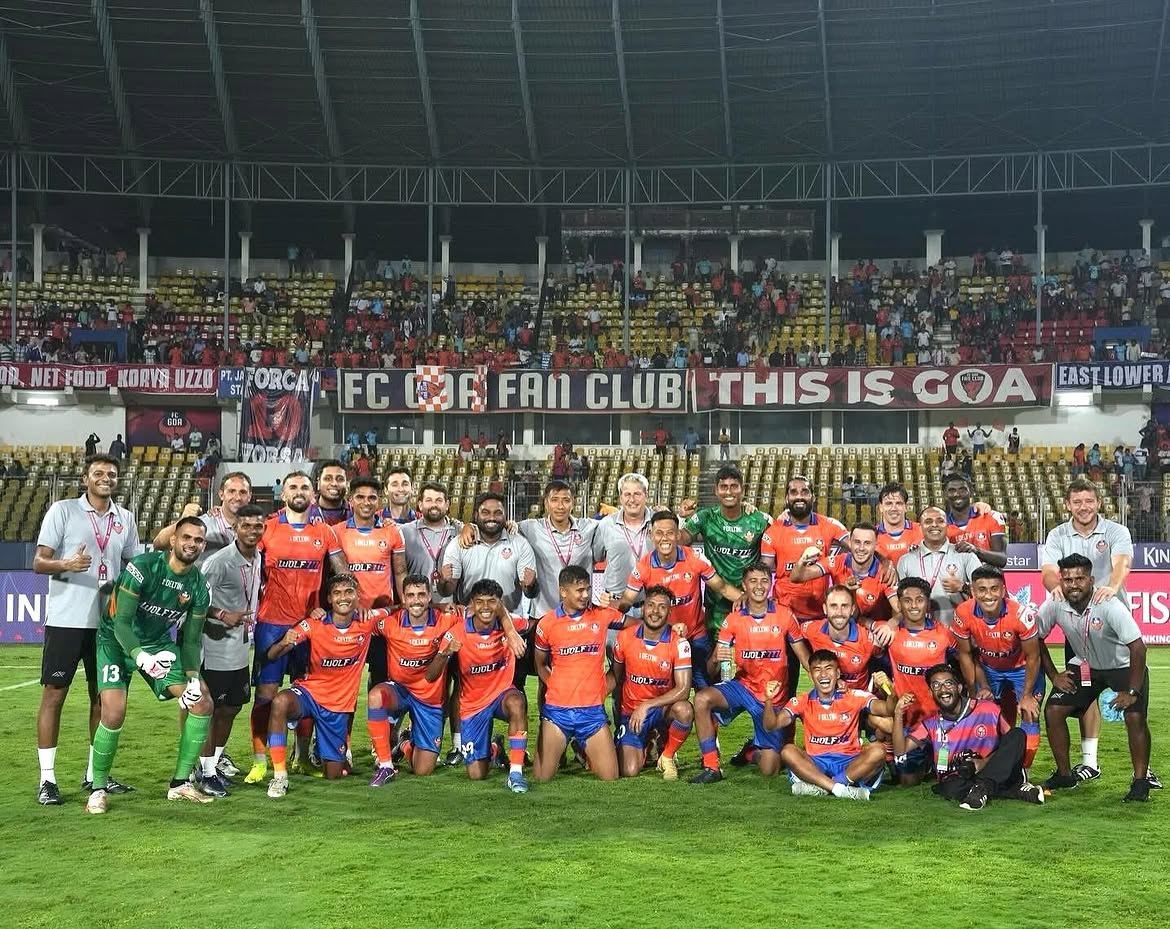
FC Goa’s Coaching Lineage: A Rare Case of Continuity
The Road Opened by Renedy Singh
Before Gouramangi received this opportunity, another former India captain from Manipur quietly challenged many assumptions surrounding Indian coaches.
When Bengaluru FC entered a difficult period following the departure of Gerard Zaragoza in November, Renedy Singh accepted one of the most demanding assignments in Indian football.
He inherited uncertainty.
He inherited pressure.
Most importantly, he inherited expectations.
Instead of attempting dramatic tactical changes, Renedy stabilised the team.
Players appeared more confident.
Results improved. Under his charge, Bengaluru revived their title challenge, at one point beating Inter Kashi 3-1 to move within three points of league leaders Mumbai City FC.
Supporters began discussing something they had rarely discussed before.
Perhaps Indian coaches were capable of leading India’s biggest clubs after all.
His appointment remained temporary.
Its significance did not.
Bengaluru eventually appointed the Spaniard Pep Muñoz — arriving on the back of consecutive Cambodian Premier League titles, a Hun Sen Cup, a Cambodian Super Cup and an AFC Challenge League final with PKR Svay Rieng — to take charge for the rest of the season. Renedy’s spell nonetheless demonstrated that Indian coaches could manage professional dressing rooms, communicate tactical ideas effectively and compete under immense pressure.
Whether intentional or not, Renedy helped open a door.
Gouramangi may now become one of several walking fully through it.
Why Manipur Produces Football Minds
Indian football has long celebrated Manipur for producing exceptional footballers. The intensity of a fixture like the Imphal derby between TRAU and NEROCA is proof enough of how deeply the sport runs in the state — and Manipur’s sporting production line is not limited to football, either, as PurePlay India’s own reporting on judoka Linthoi Chanambam’s rise has shown.
Perhaps it is time to recognise that it also produces exceptional football thinkers.
This should surprise nobody who understands football in the state.
Football in Manipur is not merely played.
It is discussed.
Debated.
Analysed.
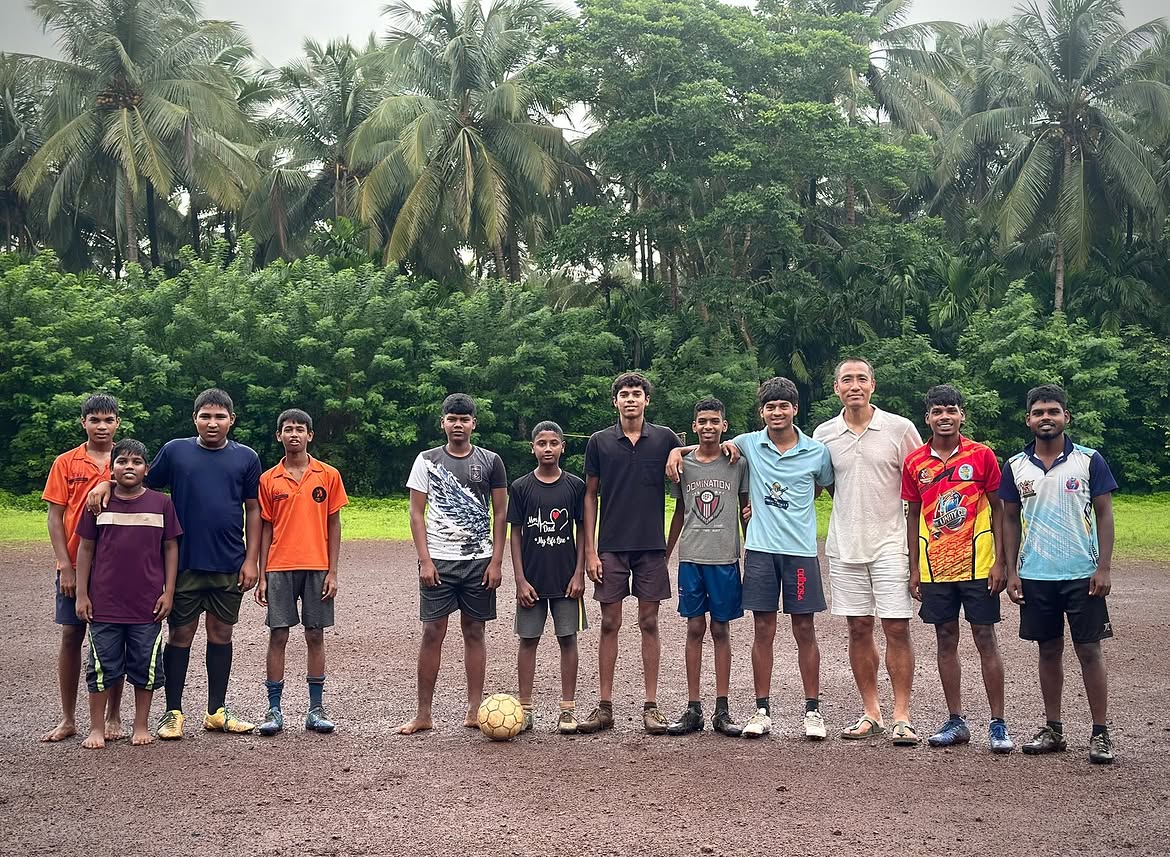
Children grow up understanding formations, positional play and tactical responsibilities long before many formally enter professional academies.
Weekend tournaments attract passionate crowds.
Local conversations revolve around movement off the ball as much as individual brilliance.
Football becomes a language.
That environment develops more than technical players.
It develops football intelligence.
And football intelligence often evolves into coaching intelligence.
This is why it should not surprise Indian football that two former India captains from the same small state — Renedy Singh and Gouramangi Singh — have emerged as leading coaching figures.
The Forgotten Generation of Indian Coaches
Gouramangi and Renedy did not appear from nowhere. They are the most visible names in a much longer list of Indian coaches who have spent years — in some cases decades — proving themselves in the I-League, youth football and state leagues, largely outside the ISL spotlight.
Khalid Jamil is the clearest proof of what happens when that experience is finally trusted at the top. He won the I-League with Aizawl FC in 2016-17 — the first title by any club from the Northeast. At NorthEast United, he served two separate interim spells — first at the end of 2019-20 after Robert Jarni was dismissed, then again in 2020-21 after Gerard Nus departed mid-season, taking the club on a ten-game unbeaten run to the play-offs, still the only Indian coach to have done so. Only on 23 October 2021 — two auditions later — was he finally made permanent, becoming the first Indian to hold a full-time ISL head coaching job at any club. (Gouramangi’s is a different, narrower first — FC Goa’s first Indian head coach specifically — five years after Jamil broke the league-wide barrier.) In August 2025, the AIFF appointed him head coach of the senior men’s national team — the first Indian in that role since Savio Medeira’s brief stint in 2011-12. He won his first match in charge 2-1 against Tajikistan, India’s first win over that opponent in 17 years, and later led India to the third-place match at a tournament against Oman, winning it on penalties for India’s first victory over Oman in 31 years.
Derrick Pereira coached across the I-League for years — Mahindra United, Pune FC, Churchill Brothers, Salgaocar, DSK Shivajians — before FC Goa handed him the head coach’s job in December 2021. He later coached India’s U-23 team and now serves as sporting director at Gokulam Kerala.
Naushad Moosa spent years as Bengaluru FC’s reserve-team coach before being handed the interim head coach’s job in January 2021, after Carles Cuadrat’s departure — steady enough work that the club extended his contract to 2024. He now coaches India’s U-23 team.
Santosh Kashyap built his coaching career at Air India, Mohun Bagan, Aizawl FC, Salgaocar and ONGC in the I-League, and as an assistant at NorthEast United and Odisha FC in the ISL, before being entrusted with the India women’s national team — the Blue Tigresses — and, most recently, the Maharashtra state team.
Clifford Miranda followed a similar arc: assistant to Derrick Pereira at FC Goa, then Odisha FC, where he was promoted to interim head coach in 2023 and won the Super Cup, qualifying the club for the AFC Cup group stage. He coached India’s U-23 team, worked as an assistant at Mumbai City FC, and in October 2025 was appointed head coach of Chennaiyin FC.
Yan Law, who took charge of Aizawl FC for the 2021-22 I-League season, and Gift Raikhan, the UEFA Pro Licence holder who led NEROCA FC to the I-League 2nd Division title in 2016-17 and a runners-up finish in the club’s maiden top-flight campaign the following season — earning the Syed Abdul Rahim Award for that achievement — round out a generation of coaches who did the unglamorous work far from the cameras. Raikhan, who also served as Manipur’s Santosh Trophy head coach, passed away in June 2026 at the age of 45. Indian football is poorer for having discovered the scale of his contribution mostly in retrospect.
Indian coaching ability has existed.
Opportunity has not.
That, finally, is beginning to change — and 2025-26 is the season the change became impossible to ignore.
Indian Coaches Leading Right Now (2025–26 Season)
Khalid Jamil — appointed Aug 2025
Gouramangi Singh — appointed 2026
Clifford Miranda — appointed Oct 2025
Naushad Moosa
Santosh Kashyap — formerly India women’s (Blue Tigresses) head coach
Foreign vs Indian Coaches
This article should never become foreign coaches bad, Indian coaches good.
That framing would be dishonest, and it would insult the coaches who built modern Indian football.
Zico gave FC Goa its first identity. Sergio Lobera turned that identity into a genuine possession-football culture, taking the club to an ISL final, a Super Cup and a league shield. Antonio Habas won the ISL title twice, with two different clubs. Igor Štimac spent five years rebuilding India’s national team, winning two SAFF Championships along the way, before being let go in June 2024 after a poor World Cup qualifying campaign. Manolo Márquez then took the job — juggling it alongside FC Goa for a season — before stepping back in mid-2025 to focus on the club, at which point Khalid Jamil was appointed. These are real, substantial foreign contributions, and pretending otherwise would not strengthen the argument — it would cheapen it.
Foreign coaches accelerated Indian football.
Now Indian coaches deserve equal opportunities.
Merit.
Not nationality.
The question was never whether foreign coaches should be in the ISL. It is whether Indian coaches have been given the same runway to fail, learn and improve that every foreign coach who has ever taken a job in India was given by default.
The Interim Trap
Here is the part of this story that is less comfortable to write.
In 2020, the AIFF changed the rules to formally allow Indian coaches to be appointed as ISL head coaches at all. Four years later, the league went further, mandating that every club carry an Indian assistant coach holding an AFC Pro Licence or its equivalent. The rule reads, in the league’s own words: if the head coach is relieved of his position or suspended, the Indian assistant “will take over all head coach duties as the interim head coach.”
Read that rule again.
It does not say the Indian assistant becomes a candidate for the job.
It says he becomes the interim.
Khalid Jamil lived this rule before it was even written down. He deputised for NorthEast United twice — once at the end of 2019-20 after Robert Jarni was sacked, once again in 2020-21 after Gerard Nus left mid-season — and delivered a ten-game unbeaten run and a play-off berth both times, before the club finally made him permanent in October 2021. Two auditions. Two years. One yes.
Naushad Moosa ran Bengaluru FC’s first team after Carles Cuadrat’s exit in January 2021 and was rewarded with a new contract — as reserve-team coach, not head coach. Renedy Singh, four years later, stabilised the same club mid-title race and was still handed over to Pep Muñoz once a “bigger” name became available. Gouramangi Singh himself deputised for Márquez at the Intercontinental Cup, unofficially, before Goa made his job official — a trial nobody called a trial.
None of this means the individual decisions were wrong. Pep Muñoz may well be the better appointment for Bengaluru’s run-in. Márquez may have simply been the right coach for Goa in 2023. But a rule that hands Indian coaches the running of the team and none of the security of the job, applied consistently across a fourteen-team league, is not an accident. It is a design.
The Numbers Behind the Argument
None of this started with the ISL, either. Through the 1970s, 80s and into the I-League era, Indian coaches such as P.K. Banerjee, Amal Dutta, Subrata Bhattacharya, Subhas Bhowmick and T. Chathunny won titles and shaped the domestic game. When the ISL launched in 2014 with foreign marquee players and a broadcast-first spectacle, that generation was, in the words of one report on the league’s own coaching pipeline, already “on their way out,” with “decks actually cleared for foreign professionals to take over.” The official explanation offered at the time was that Indian coaches were reluctant to pursue formal AFC coaching licences. Khalid Jamil holds his. So does Gouramangi. So does every Indian assistant coach the ISL now requires clubs to employ.
One more thing deserves to be on the record, precisely because it is uncomfortable and precisely because it was said on the record, if anonymously. Speaking to National Herald in 2024 about why Indian coaches are so rarely trusted with top ISL jobs, one league insider put it this way: “There is no doubt an obsession with the fair skin while looking for the head coaches.” This piece is not equipped to prove or disprove a motive inside anyone’s boardroom. What it can say is that the pattern the insider was describing — audition after audition, security reserved for imported names — is not a matter of opinion. It is right there in the rulebook.
Lessons from Japan
Japan offers the clearest working model of what India is only now attempting.
The Japan Football Association prioritised coach education long before it prioritised results — a philosophy that traces back to the 1930s under president Ryutaro Fukao, who pushed coaching development ahead of the 1936 Berlin Olympics. That early instinct hardened, over decades, into a formal structure: a tiered licensing pathway running from grassroots Kids and Class D and C courses up to Class B, Class A and finally the Pro Licence required to coach in Japan’s top flight — the same model, structurally, that UEFA and the AFC use today. The JFA Academy extended that investment into youth development, and from 2006 the JFA began exporting its coach-education framework to the rest of Asia through its International Coaching Course.
Japanese football trusted Japanese coaches.
Foreign expertise became support.
Not dependence.
The payoff has been visible on football’s biggest stage. Hajime Moriyasu, promoted from within Japan’s own coaching pathway, took charge of the national team in 2018. At the 2022 World Cup, his Japan side beat both Germany and Spain — two former world champions — in the group stage, before a narrow penalty-shootout exit to Croatia in the round of 16. At the 2026 World Cup, Japan again advanced from a group containing the Netherlands, before losing narrowly to Brazil, 2-1, in the round of 32. Two consecutive World Cups, two runs deep into the knockout rounds, under a coach the system produced rather than imported.
Croatia
Population: roughly 3.9 million — smaller than Bengaluru.
World Cup final: 2018.
World Cup semi-final: 2022.
Croatia remains one of only two nations — alongside Uruguay — to reach a World Cup final with a population under four million, a fact that has nothing to do with population size and everything to do with football identity, coach education and technical intelligence built into the country’s own football culture rather than imported wholesale from outside it.
It is also worth being honest about the other half of the story: Croatia’s own golden generation is not eternal. At the 2026 World Cup, the side lost in the round of 32 to Portugal. Football identity does not guarantee permanent success. What it guarantees is that a country stops being dependent on outside help to compete — that its down cycles are followed by rebuilding from within, not by starting over from zero.
Australia
Australia offers a good comparison precisely because it did not resist imported ideas — it absorbed them, then built a domestic coaching pipeline on top.
Football Australia now requires its own Pro Diploma — a roughly year-long program of intensive teaching blocks, aligned with AFC and UEFA convention — for any head coaching job in the A-League Men’s or Women’s competitions. Graduates of that pathway include Ange Postecoglou, who went on to manage Celtic and Tottenham Hotspur; Kevin Muscat, who took his coaching career to Yokohama F. Marinos and Shanghai Port; and Joe Montemurro, one of the most respected coaches in the modern women’s game. None of them needed to leave the Australian system to become internationally credible. The system made them internationally credible, and then the world came calling.
FC Goa
FC Goa is one of the few ISL clubs that has maintained a recognisable footballing philosophy across five different head coaches in twelve years.
Continuity.
Academy.
Possession football.
Youth development.
That philosophy did not survive by accident. It survived because the club kept promoting from within its own coaching structure rather than resetting its identity with every managerial change — and Gouramangi Singh’s promotion is the logical next step in that pattern, not a break from it.
The PurePlay Argument
Indian football does not need more Indian coaches.
Nor fewer foreign coaches.
It needs the best coaches.
But Indian coaches must be given pathways to become the best.
A pathway looks like an assistant’s job that leads somewhere. A caretaker spell that gets treated as an audition rather than a placeholder. A federation willing to hand the senior national team to a coach who won an I-League title with Aizawl instead of a foreign name with a bigger reputation and a thinner connection to Indian football. Every example in this piece — Khalid Jamil, Gouramangi Singh, Renedy Singh, Clifford Miranda, Naushad Moosa, Santosh Kashyap, Gift Raikhan — is a version of the same pathway, built slowly, mostly without attention, over more than a decade.
Final Recommendation
The success or failure of Gouramangi Singh should never become a referendum on Indian coaches.
Coaches should be judged individually.
Just as foreign coaches are.
If Indian football truly believes in meritocracy, then Indian coaches must be allowed to succeed — or fail — on merit.
Only then will Indian football finally begin trusting its own.
Khalid Jamil has already shown what that trust can produce, eleven months into the job. Gouramangi Singh now gets his own chance to show it, at the club that gave him the platform to earn it.